Dr. Ye Jia Michelle CHI4925 Language and Wellbeing
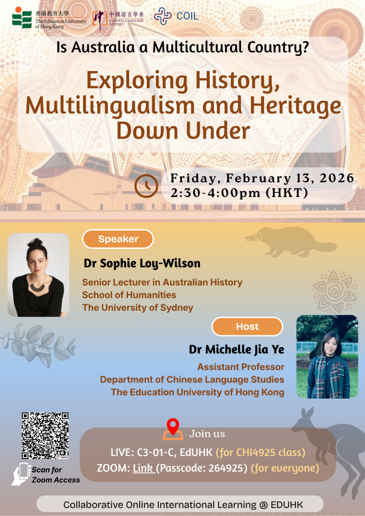
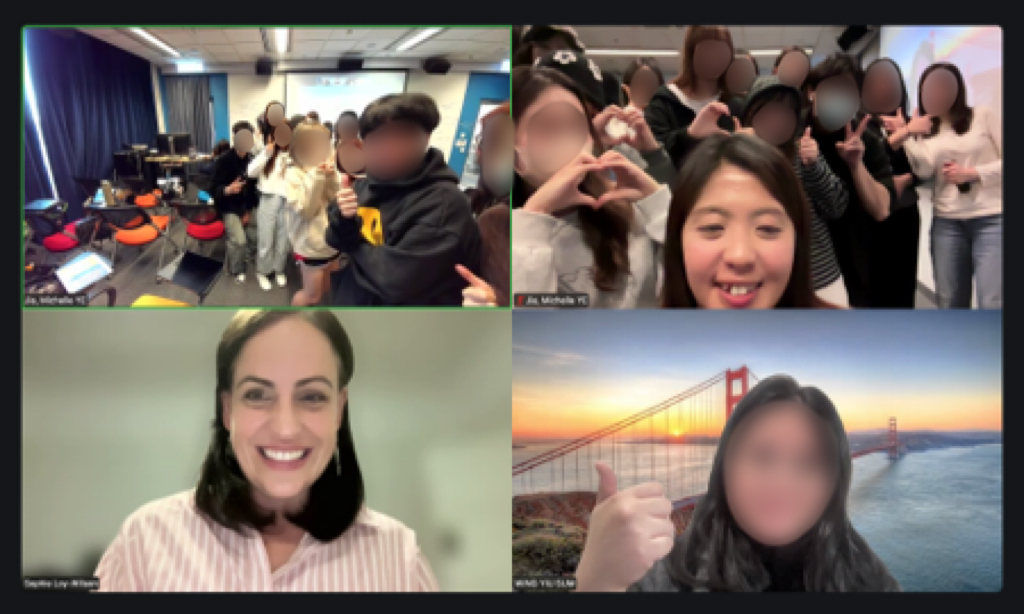
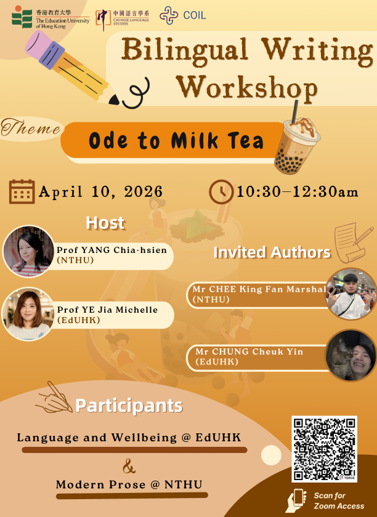
As part of the Collaborative Online International Learning (COIL) initiative at The Education University of Hong Kong (EdUHK), CHI4925 Language and Wellbeing integrated two online learning activities: a guest lecture on Australian multicultural history and multilingualism delivered by Dr. Sophie Loy-Wilson (University of Sydney) via Zoom on 13 February 2025, and a creative writing workshop co-offered by Professor Yang Chia-hsien (Tsing Hua University, Hsinchu) on 10 April 2025. The lecture explored the tension between Australia’s official multiculturalism and structural inequalities, while the workshop celebrated cross-lingual writing collaboration through a collaborative activity on the motif “milk tea,” involving 70 students from both universities. The materials below—including screenshots from the Zoom session, selected lecture slides, workshop outputs, and excerpts from student writing—serve as an exemplar of how COIL can be implemented at course level to enrich undergraduate learning experiences.
Guest Lecture and Creative Writing Workshop on Language, Wellbeing and Multiculturalism
How do we understand our multilingual past and present? Does Australia provide good model for securing community wellbeing and sustainable conservation of multi-cultural heritage? What can Hong Kong – a city of great diversity, high mobility as well as deep disparity – learn from Australia?
In this lecture, Dr. Sophie Loy-Wilson gave a fascinating overview on Australian history and multiculturalism, tracing the country’s development from Indigenous times through European colonization, the gold rushes, and modern multicultural policies. She highlighted the tension between Australia’s official multiculturalism and underlying structural inequalities, particularly in language rights and resource distribution, shedding new lights on language matters in Hong Kong. The lecture included discussion of the White Australia Policy, the shift from European to Asian demographics, and the challenges of maintaining cultural diversity while preserving national identity.
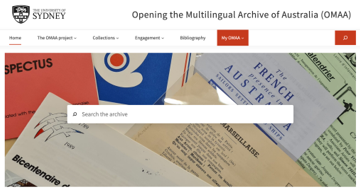
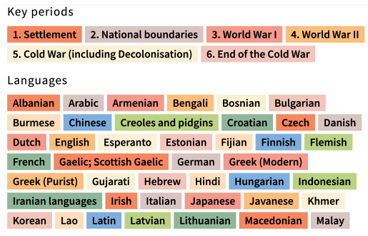
The lecture also guided the students into Opening the Multilingual Archive of Australia (OMAA) , a mega digitization project of historical documents in multiple languages at Sydney U, and included a Q&A portion where students discussed the parallels between Australia’s multicultural challenges and Hong Kong’s own experiences with diversity and language policies.
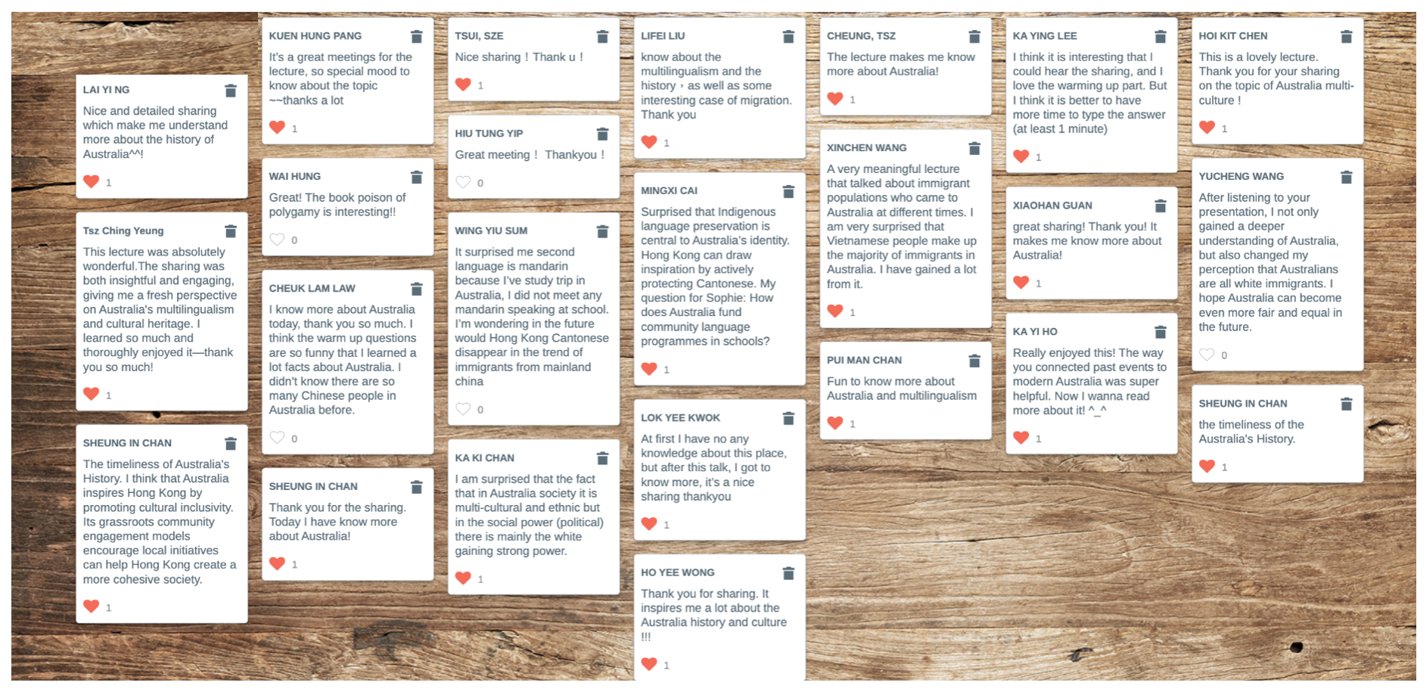
Students were surprised at the parallels between their home city and Australia, and excited to explore innovative ways to reconfigure and appreciate multiculturalism in Hong Kong to cultivate values for equality and inclusivity.
Writing is as challenging as it is joyful. What does the very act of writing mean to us, and particularly to our everyday wellness? Can we tap into our bilingual competence to maximize creativity, and approach more truth about writing and about ourselves?
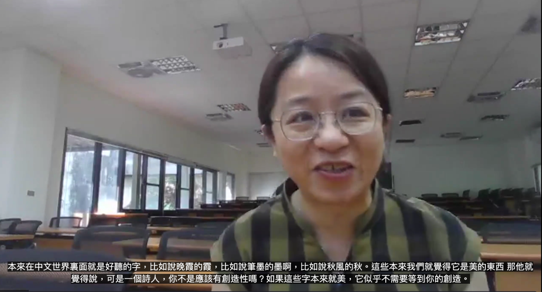
This online workshop, moderated by Dr. Michelle Jia Ye and led by Professor Yang Chia-Hsien, an award-winning writer and literary critic based at Tsing Hua University in Hsinchu (NTHU), was a wonderful opportunity for renewing passion for writing.
The workshop was offered to the class of CHI4925 at EdUHK and the undergraduate class of Literary Writing at NTHU to celebrate the magic of cross-lingual writing collaboration. The students were also honored to hear advice about creative writing and independent publishing from a stellar lineup of young published writers, Mr. Chee King Fan Marshall (NTHU) and Mr. Chung Cheuk Yin (EdUHK), who generously shared their craft and insights.
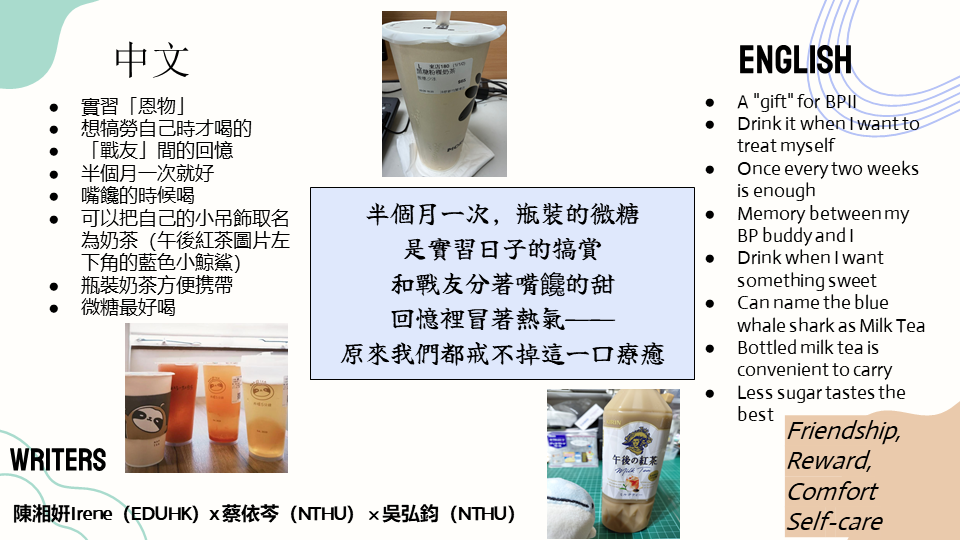
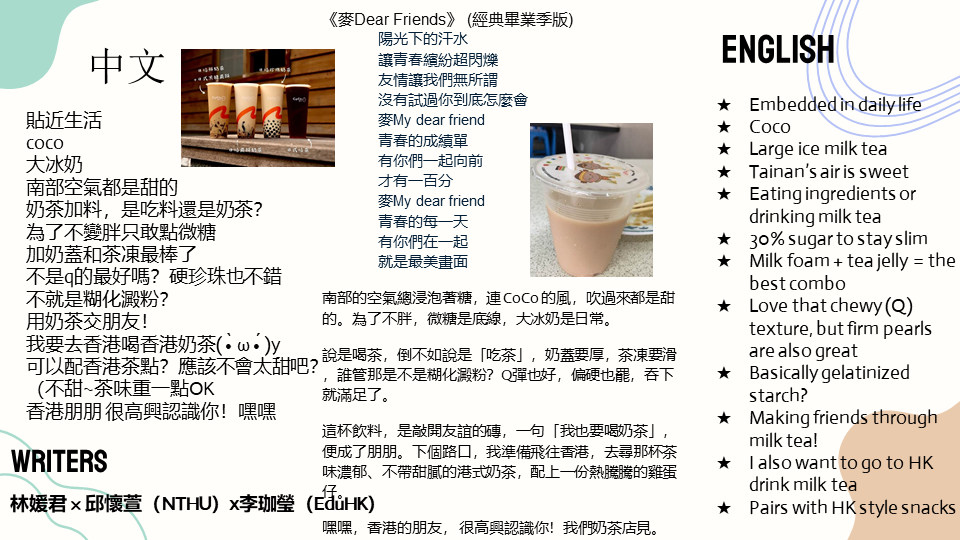
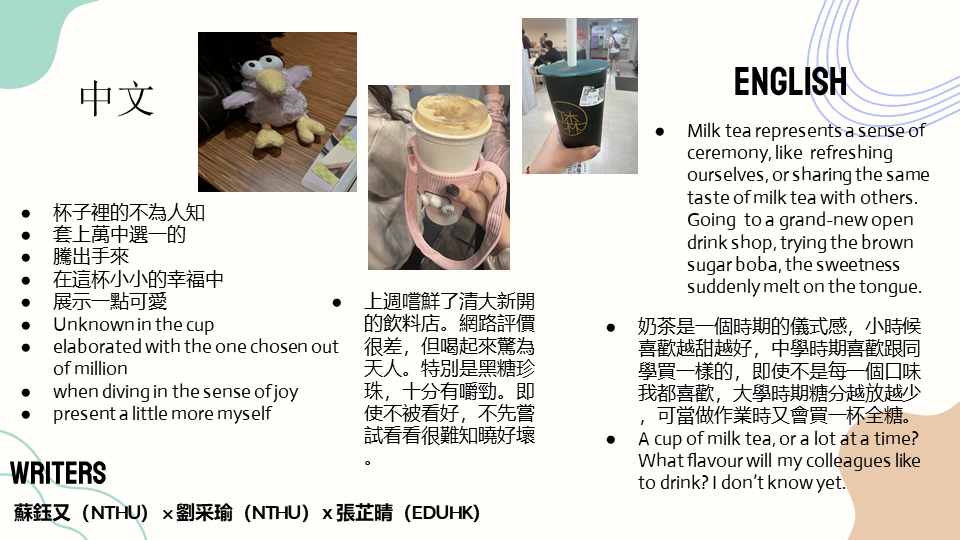
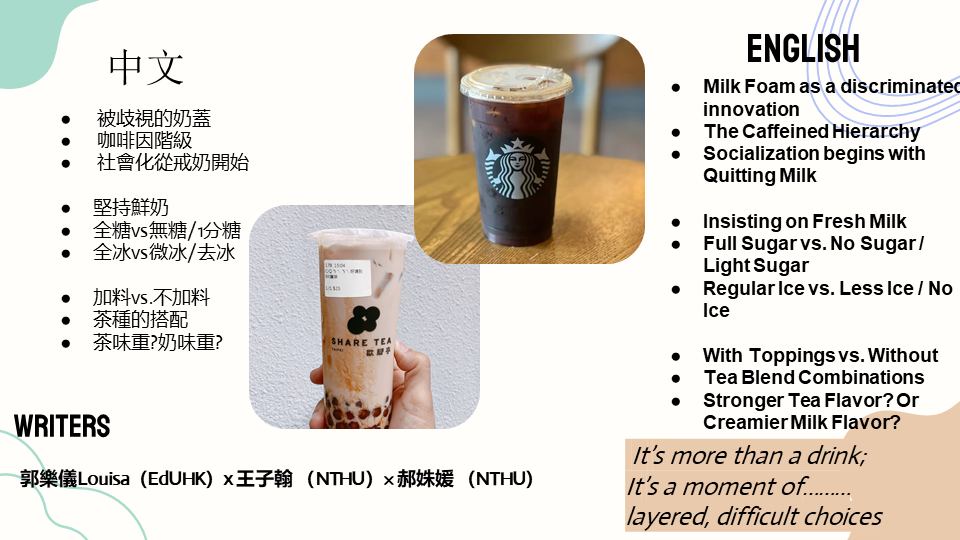
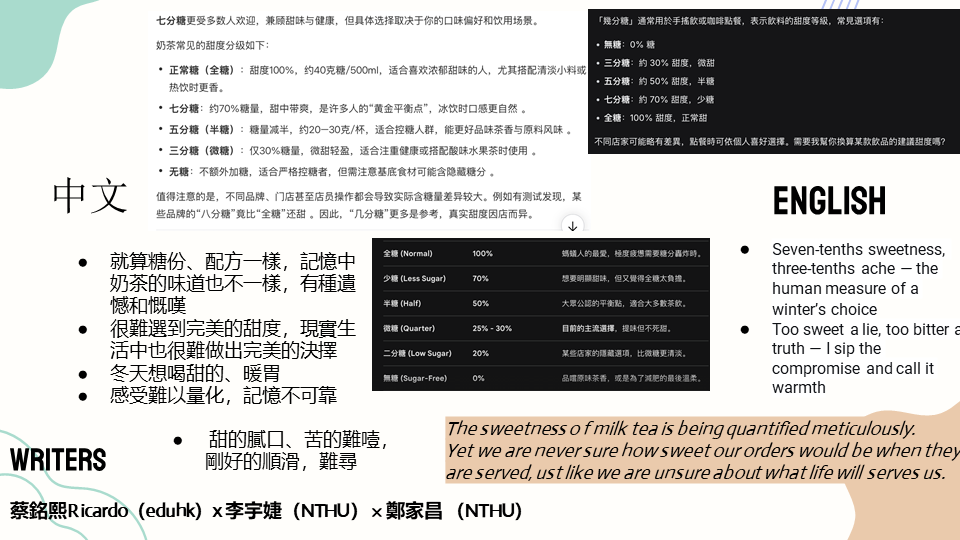
The workshop’s core was a collaborative activity. Students from both universities, totalling 70, were split and mixed into 19 groups to collage sources for writing the motif “milk tea” and received heartfelt comments from the guest speakers. The exercise was a vivid showcase of cross-language writing in action, weaving lived experience, skills, and cross-cultural insight into one collective creative moment.
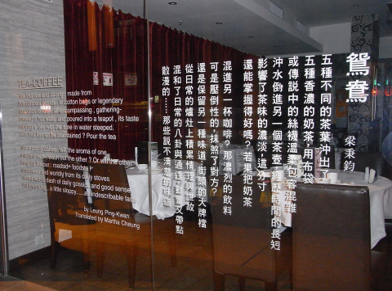
Professor Yang talked the students through Leung Ping-kwan (Yesi)’s Hong Kong modernist poem Yuenyeung (鴛鴦), a tribute to the local drink born from mixing coffee and milk tea. Yang’s close reading revealed how Yuenyeung brilliantly weaves colloquial speech and everyday objects into poetic form, defamiliarizing language and shooting new energies in unexpected word combinations. She reminded the students that a simple, everyday motif like milk tea can illuminate the abstract clash of language registers and local cultures, turning a familiar comfort into a doorway to deeper connection. She inspired the students by stressing that writing is not merely about time or sincerity; it is mental rehearsal that we can start right now, in the present moment.
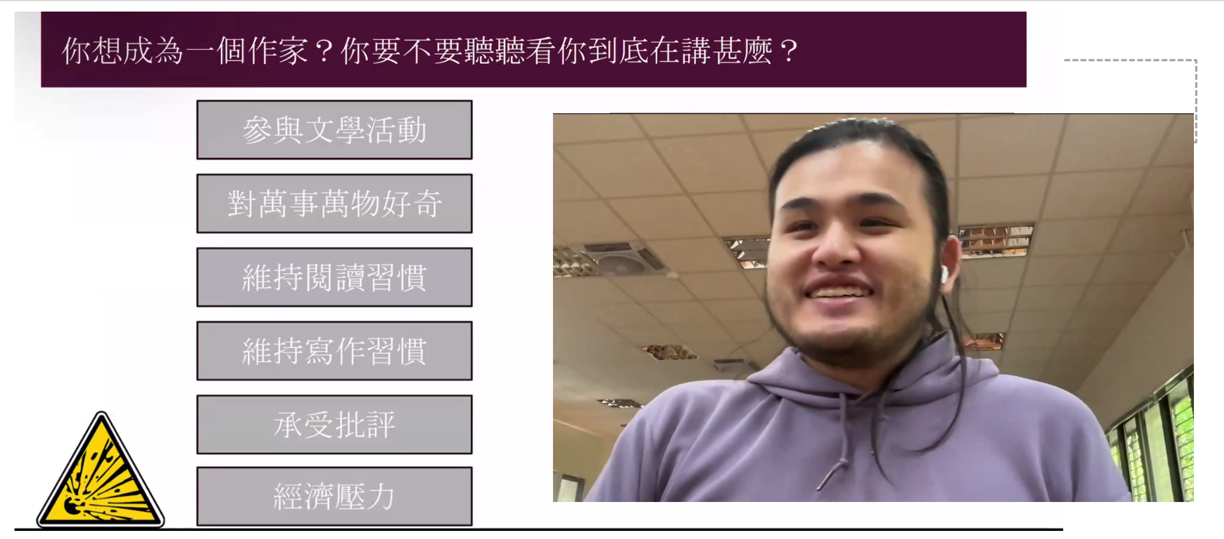
Mr. Chee King Fan Marshall, a published young writer, postgraduate student and teaching assistant at NTHU, explored the prerequisites and realistic concerns of becoming an independent writer. The joy of writing, as he shared, originated from genuine curiosity and crystallized in interaction with everything a writer reads. It is a long process that draws upon individual resilience when challenged with non-literary barriers. But the optimism remained, as “your best piece is the piece that you start working on right now.”
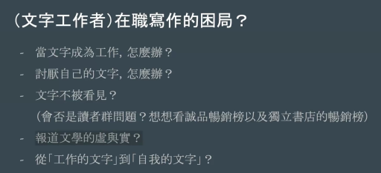
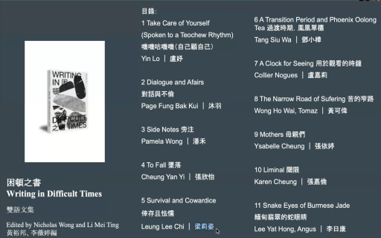
Mr. Chung Cheuk Yin, a published young author, editor, and research assistant at EdUHK, dissected the conflicted feelings when writing is not only one’s passion or one’s way of being, but also one’s profession. The intersection of selfhood and authorship is so intriguing and vital to everyone whose self-validation comes through creative writing. Chung believed that being true to one’s observation and care is the key, and the habit of turning feelings and thoughts into concrete words — however fragmentary — is the instrument. Chung shared his recently published poem dedicated to a tiny lazy pleasant moment in a hectic, heart-breaking time. The traveling between spoken and written Cantonese in his writing was one of his sources of inspiration. In this vein, Chung presented a collection of bilingual essays about the “difficult times” in Hong Kong, underscoring the potential to liberate creative energy in bilingual writers.