FHM COIL Project (0236O) Public Seminar
FHM COIL Project Dissemination Seminar
- Date: Friday, 5th June 2026
- Time: 10:30 am – 12:00 pm
- Venue: B4-LP-10 & Online via ZOOM
- Hosted by: Prof. Wang Lixun (LML) and Dr. Tim Taylor (ELE)
- Speakers:

(click their profile images above to view their presentations in detail)
(complete video recording)
Title: Theory, Stories and Takeaways: Rethinking Short COIL Sessions
Abstract: This short presentation reflects on how Dr. Lau Chaak Ming’s COIL teaching has changed over time: from research-based discussions of intercultural communication and language ideology to more experiential sessions that students can connect with immediately. Drawing on three separate collaborations with the University of Lapland through the GloMed project, Meijo University, and New York University, he will discuss how he balances theory, examples, and memorable take-home ideas when meeting students only once or twice. He will also share practical reflections on planning online international lessons as structured, responsive, and mildly entertaining performances, while still engaging with serious questions about language, culture, and communication.
Speaker:
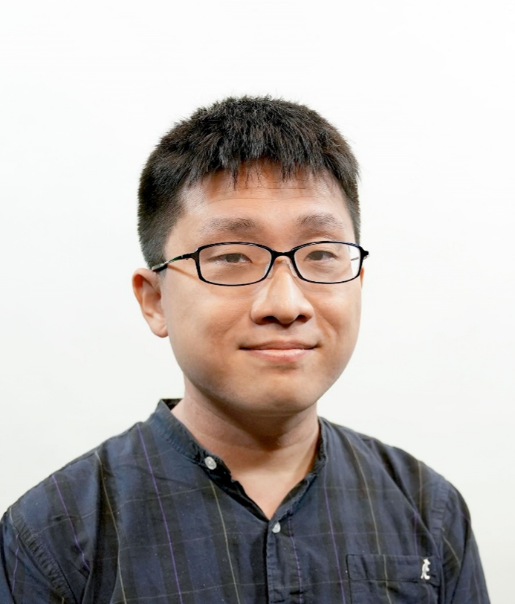
Dr. Lau Chaak Ming
Dr. Lau Chaak Ming is Assistant Professor in the Department of Linguistics and Modern Language Studies and Director of the Centre for Research on Linguistics and Language at The Education University of Hong Kong. His work spans Cantonese linguistics, digital humanities, language technology and resource construction for low-resource languages. He is the founder of words.hk and PI of TypeDuck, a Cantonese input system that supports heritage language learning. He serves as President of the Linguistic Society of Hong Kong (2026–27) and Vice President of Association for Conservation of Hong Kong Indigenous Languages.
Title: From Classroom to Global Collaboration: A COIL Journey in Intercultural Communication
Abstract: This presentation shares the design and outcomes of a semester-long COIL project integrated into ENG2336 Intercultural Communication at The Education University of Hong Kong. By partnering with students from Meijo University, Japan, approximately 40 multicultural teams were formed to collaboratively research and produce a joint video presentation, transforming theoretical concepts like cultural adaptation, politeness strategies, and high- and low-context communication into lived experiences. The presentation will walk through the project’s philosophical foundations, its phased implementation from trust-building cultural exchange meetings to final video production, and the assessment ecosystem that connected shared group outputs to individual critical reflection. Drawing on instructor reflections from both institutions, it will highlight the key conditions that made the collaboration work, including proactive expectation management, logistical coordination, and a pedagogical design that treated every communication challenge as learning content rather than an obstacle.
Speaker:
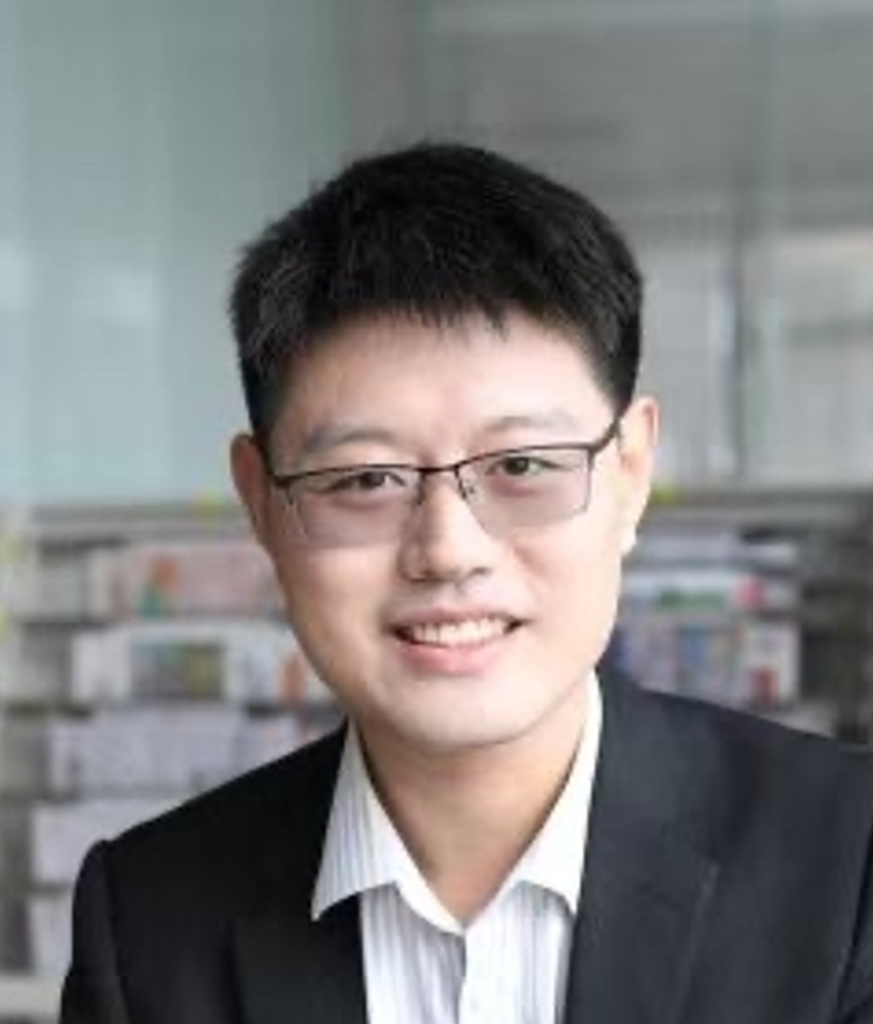
Dr. Song Ge
Dr. Song Ge is Assistant Professor in the Department of Linguistics and Modern Language Studies, The Education University of Hong Kong. He studies urban textscapes, linguistic/semiotic landscapes, digital cultural heritage and museum, Chinese culture in global contexts, translation and language use on social media, and translation (pedagogy) in the age of AI. He was the principal investigator of grants from the Ministry of Education of the PRC and Guangdong Province. He now serves as an Editorial Board Member for Humanities & Social Sciences Communications and The International Journal of Chinese and English Translation & Interpreting. He is the editor of Multilingual Education Yearbook 2025, and the author of the book Diversity and Hybridity: A Stroll through Hong Kong Culture (in Chinese).
Title: Co‑Creating a Lexicon of Migration: The Use of Collaborative Online International Learning (COIL) in Intercultural Training
Abstract: This presentation explores the pedagogical potential of implementing Collaborative Online International Learning (COIL) in programmes of Translation and Intercultural Communication. As higher education becomes increasingly internationalized and digitally mediated, COIL offers a promising framework for linking classrooms across borders and enabling students to engage in authentic intercultural and multilingual collaboration without the environmental cost of student mobility (Shields 2019). Read More
The collaboration case-study presented in this chapter, centred on joint terminology building and the creation of a trilingual Lexicon of Migration, required students from distinct linguistic and cultural backgrounds to work together in multilingual teams to research, negotiate, and document concepts related to migration, mobility, and belonging. This process not only foregrounded the linguistic complexity of migration discourse but also made visible the ethical and political dimensions of word choice and conceptual framing. In doing so, it fostered critical reflection on how language, culture, and power interact in shaping global narratives of migration and identity.
The chapter highlights the role of digital communication tools, including collaborative platforms, video conferencing, and shared glossaries, in creating spaces where intercultural understanding are co constructed among peers (Elbaz & Loupaki 2023 ; Liu & Shirkey 2021). Online interaction reshaped the dynamics of learning: students act simultaneously as language experts, mediators, and researchers, negotiating meaning, authority, and disciplinary perspectives in real time. These digitally mediated encounters not only enhanced intercultural awareness (Hackett et al. 2023) but also illustrated how multimodal and multilingual communication can unsettle traditional hierarchies of knowledge, opening opportunities for more equitable and reflexive ways of learning (Liang & Schartner 2020).
At the same time, the presentation assesses the logistical and pedagogical challenges inherent in COIL practice (Rubin & Guth 2022) by using a survey of 20 student participants. Issues such as time zone coordination, differing academic schedules, and course learning objectives demanded sustained instructor facilitation and flexible course design. Furthermore, language proficiency, and unfamiliarity with concepts related to migration sometimes led to misunderstanding. These constraints underline the need for careful scaffolding, inclusive task design, and explicit attention to ethical online conduct and cross cultural sensitivity.
Dr. Marija Todorova will argue that COIL can substantially enhance experiential learning in translation and intercultural communication education, increasing students learning and satisfaction. Through authentic engagement with linguistic diversity and collaborative meaning making, students cultivate both practical multilingual skills and global citizenship dispositions. Ultimately, COIL is seen not merely as a technological innovation but as a transformative pedagogical model, one that can bridge linguistic and cultural divides while preparing future communication professionals to navigate the complexities of our interconnected, digitally mediated world.
References:
Elbaz, P., Loupaki, E. (2023). Terminologie collaborative : analyse d'un projet interuniversitaire outillé en contexte européen. Digital Scholarship in the Humanities, Volume 38 (Issue Supplement_1), pp.Pages i48-i60. ⟨10.1093/llc/fqad027⟩.
Hackett, S., Janssen, J., Beach, P., Perreault, M., Beelen, J., & van Tartwijk, J. (2023). The effectiveness of Collaborative Online International Learning (COIL) on intercultural competence development in higher education. International Journal of Educational Technology in Higher Education, 20(5). https://doi.org/10.1186/s41239-022-00373-3
Liang, Y., & Schartner, A. (2020). Culturally mixed group work and the development of students’ intercultural competence. Journal of Studies in International Education. https://doi.org/10.1177/1028315320963507
Liu, Y., & Shirley, T. (2021). Without crossing a border: Exploring the impact of shifting study abroad online on students’ learning and intercultural competence development during the covid-19 pandemic. Online Learning Journal, 25(1), 182–194. https://doi.org/10.24059/olj.v25i1.2471
Rebek, J. L., del-Corte-Lora, V., & Riauka, E. (2022). Collaborative Online International Learning (COIL) Case Study: Canadian and Spanish Classes Develop Intercultural Competencies. In Handbook of Research on Teaching Strategies for Culturally and Linguistically Diverse International Students (pp. 345–360). IGI Global.
Rubin, J., & Guth, S. (2022). The Guide to COIL Virtual Exchange. Stylus Publishing.
Shields, R. (2019). The sustainability of international higher education: Student mobility and global climate change. Journal of Cleaner Production, 217, 594–602. https://doi.org/10.1016/j.jclepro.2019.01.291
Vahed, A., & Rodriguez, K. (2020). Enriching students’ engaged learning experiences through the collaborative online international learning project. Innovations in Education and Teaching International. https://doi.org/10.1080/14703297.2020.1792331
Speaker:
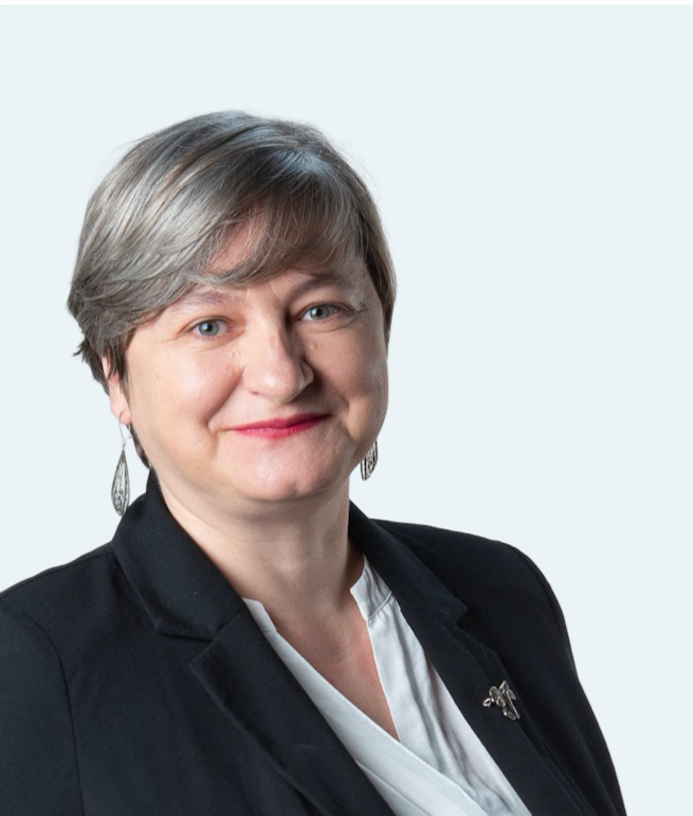
Dr. Marija Todorova
Dr. Marija Todorova is an Assistant Professor in the Department of Linguistics and Modern Language Studies at the Education University of Hong Kong. She is the author of The Translation of Violence in Children’s Literature (Routledge 2021) and co-editor of The Routledge Handbook of Interpreting Conflict (Palgrave 2021). Her research focuses on crisis translation. She serves as chief co-editor for New Voices in Translation Studies and is Co-Vice President of the International Association for Translation and Intercultural Studies (IATIS). She is a practicing literary translator in English, Macedonian, Serbian, Bosnian and Chinese. For her translations, she received the National Best Translation Award in 2007.
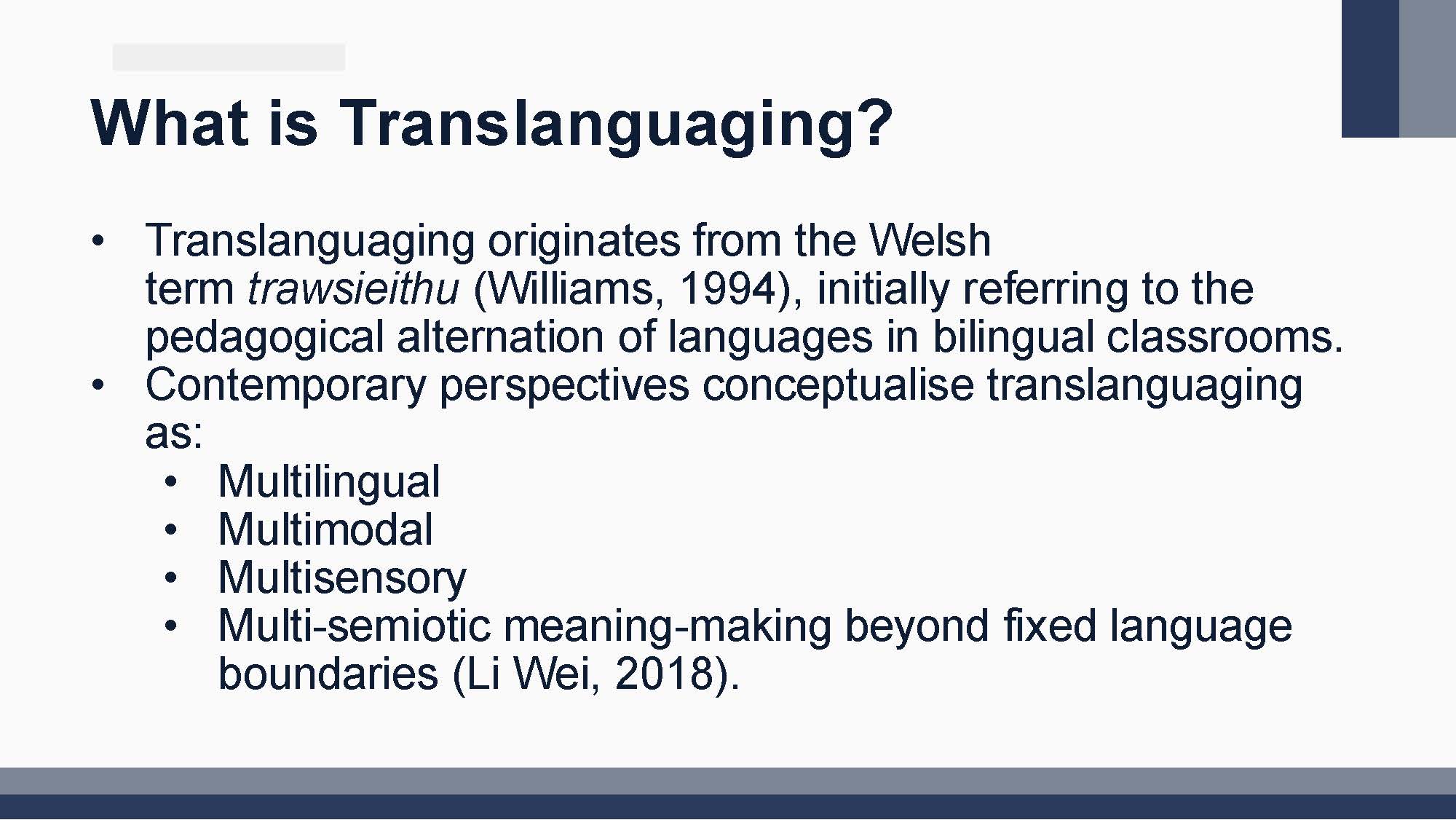
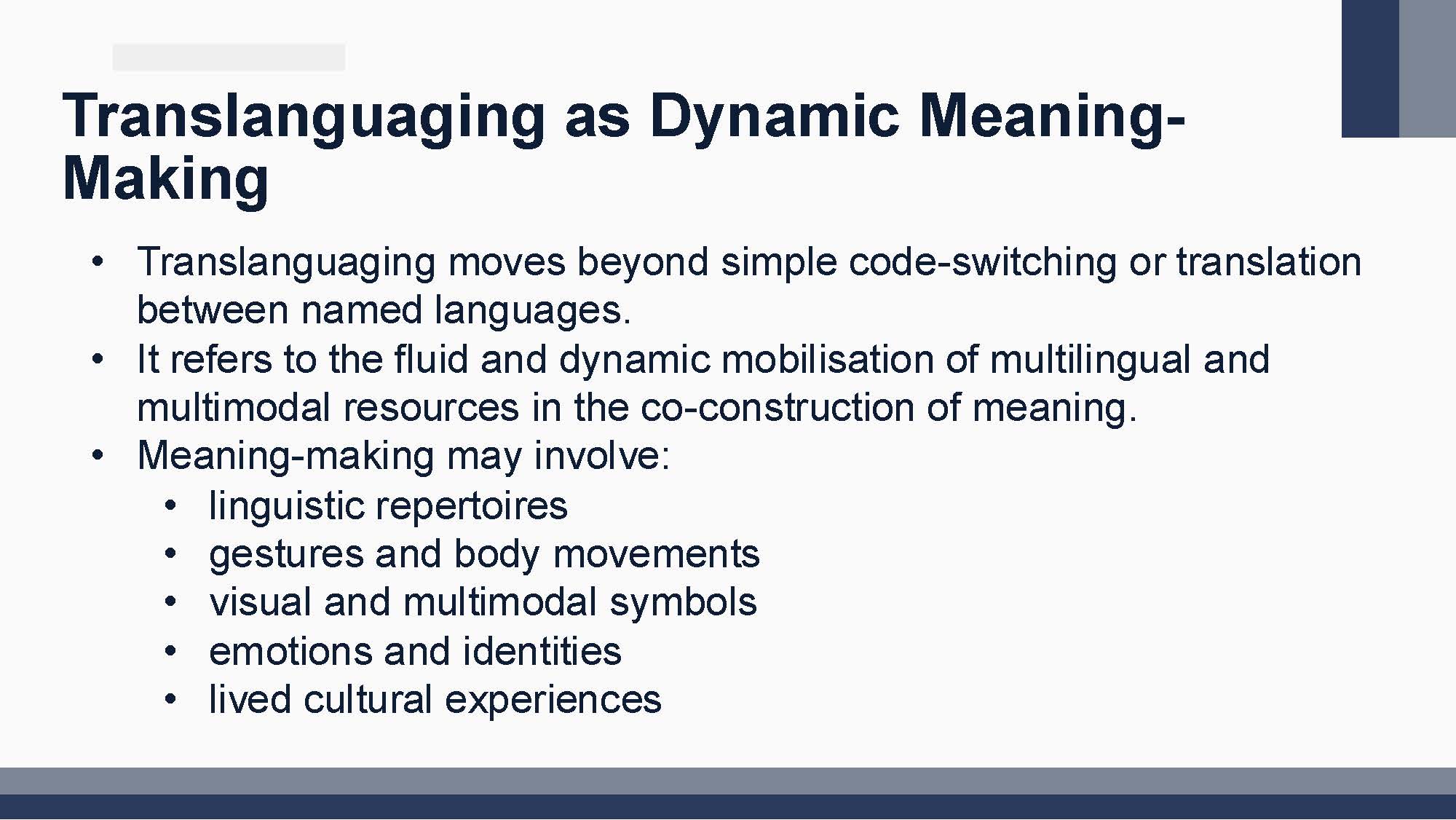
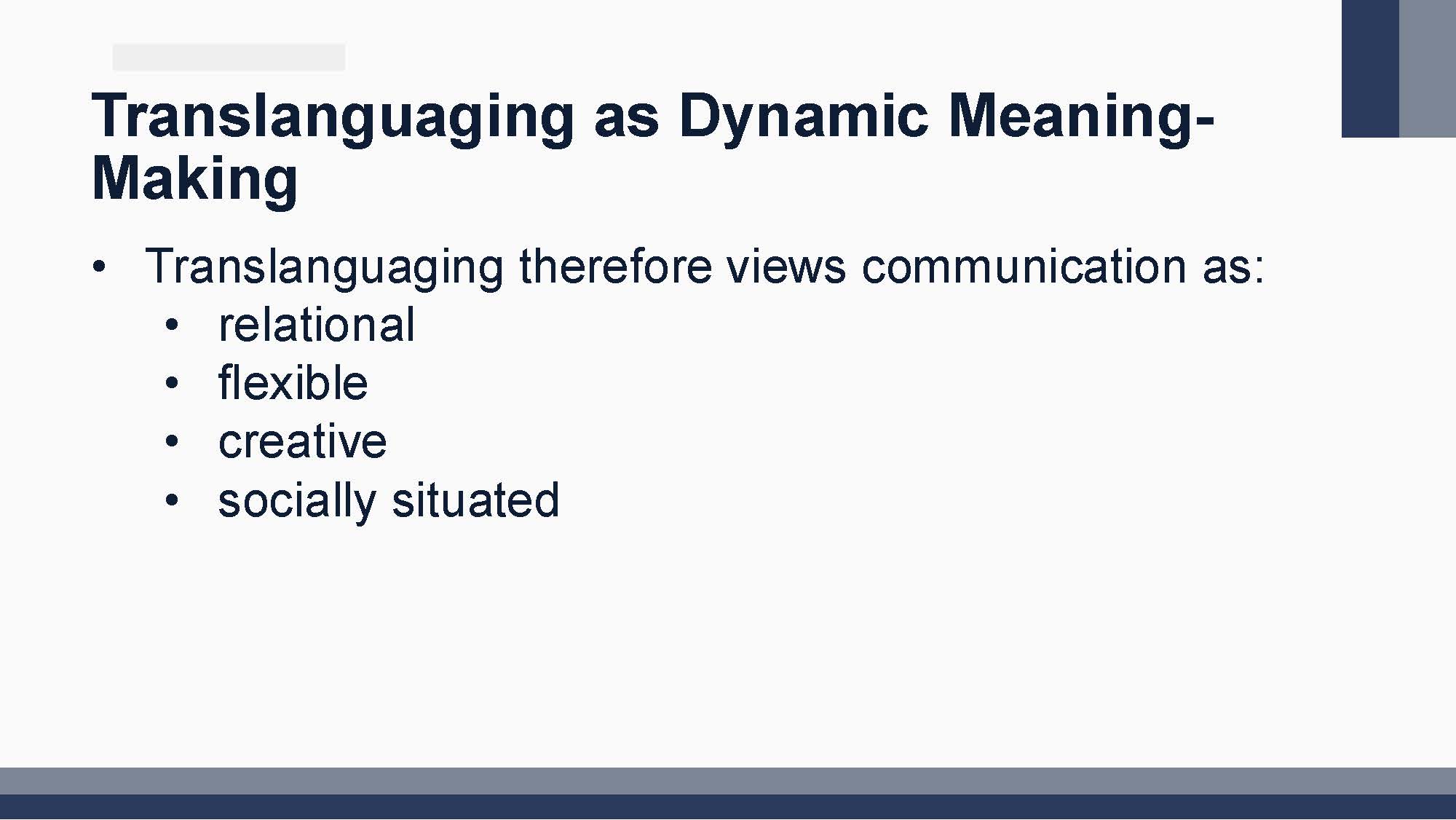
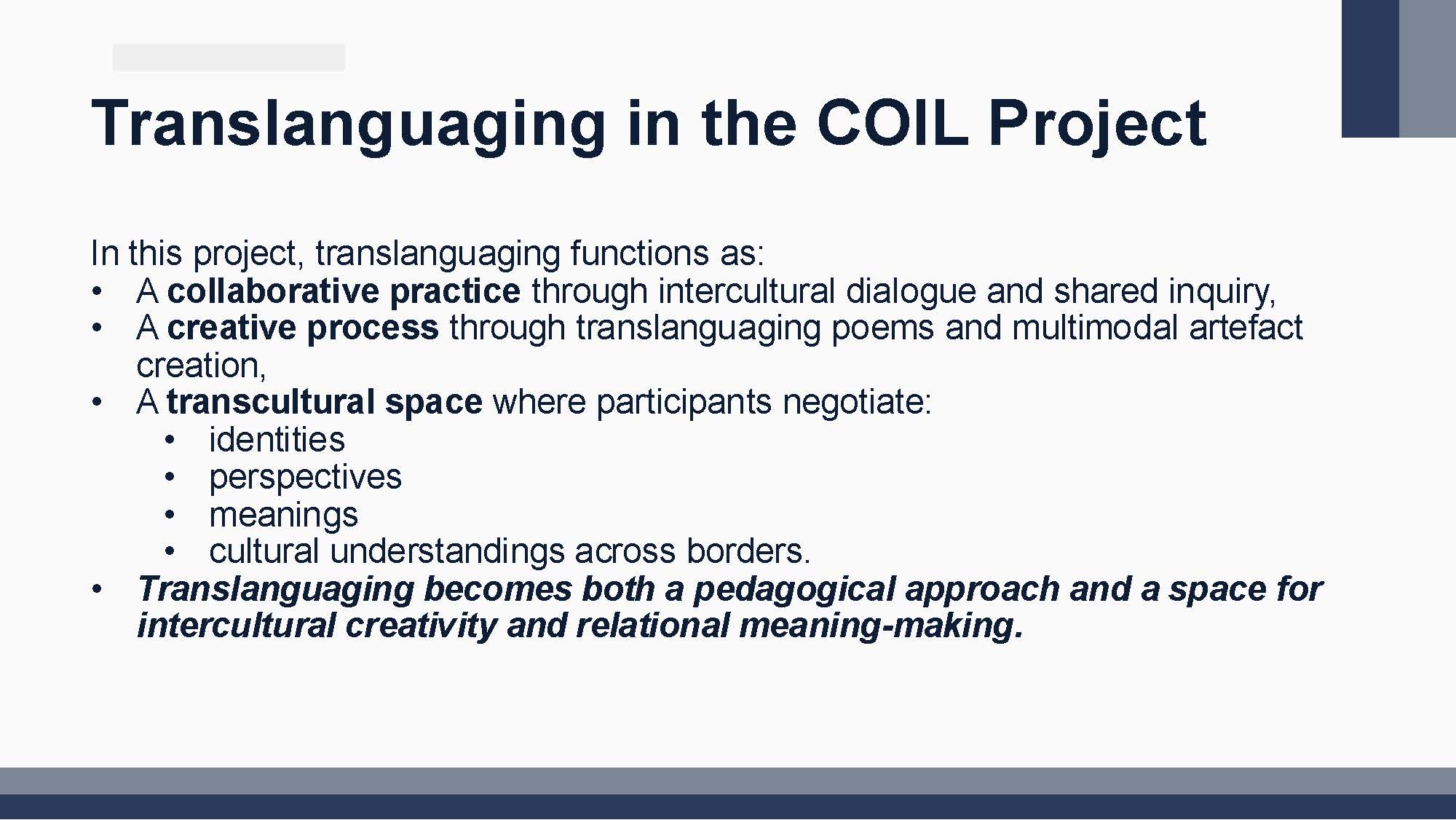
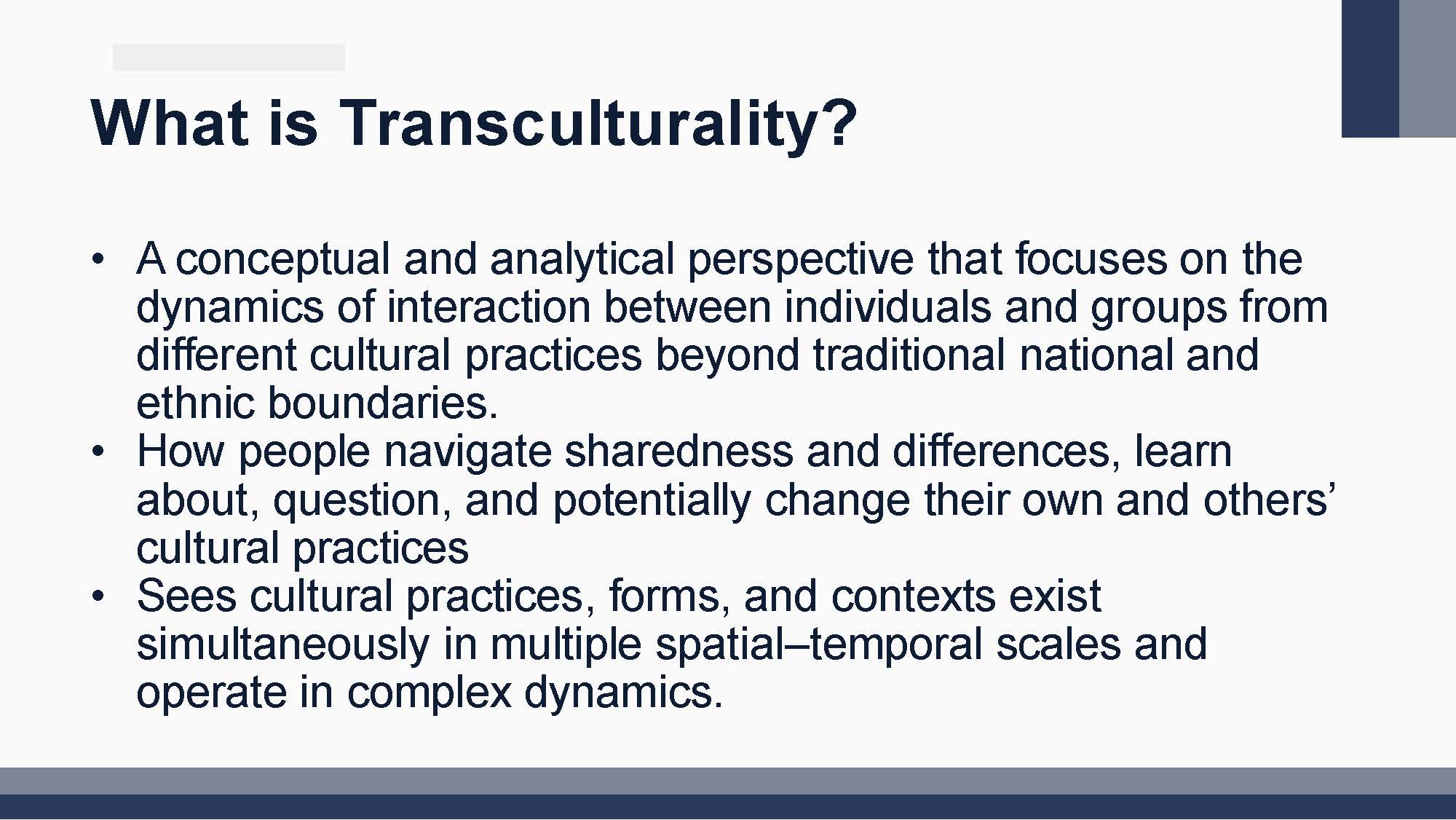
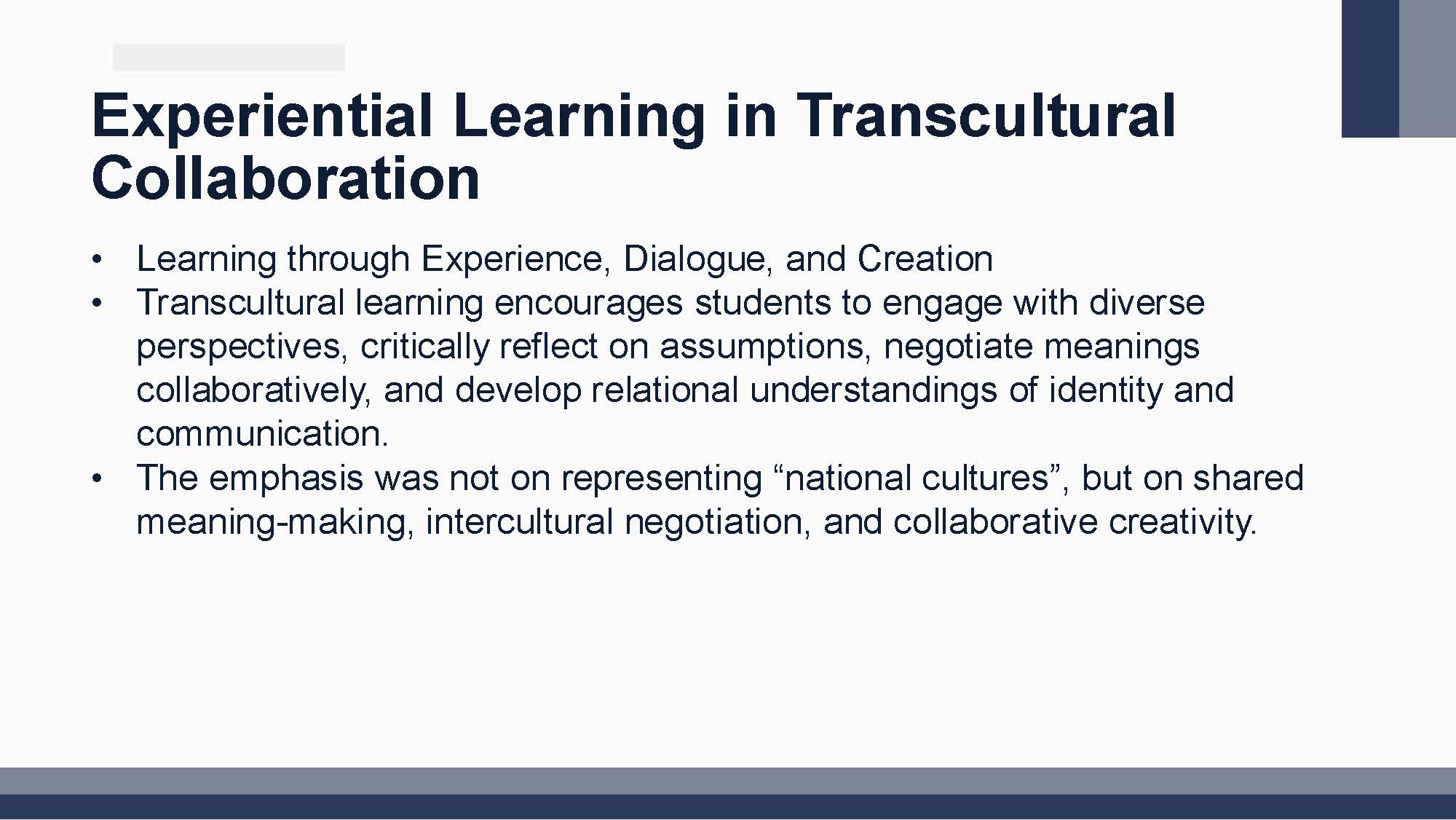
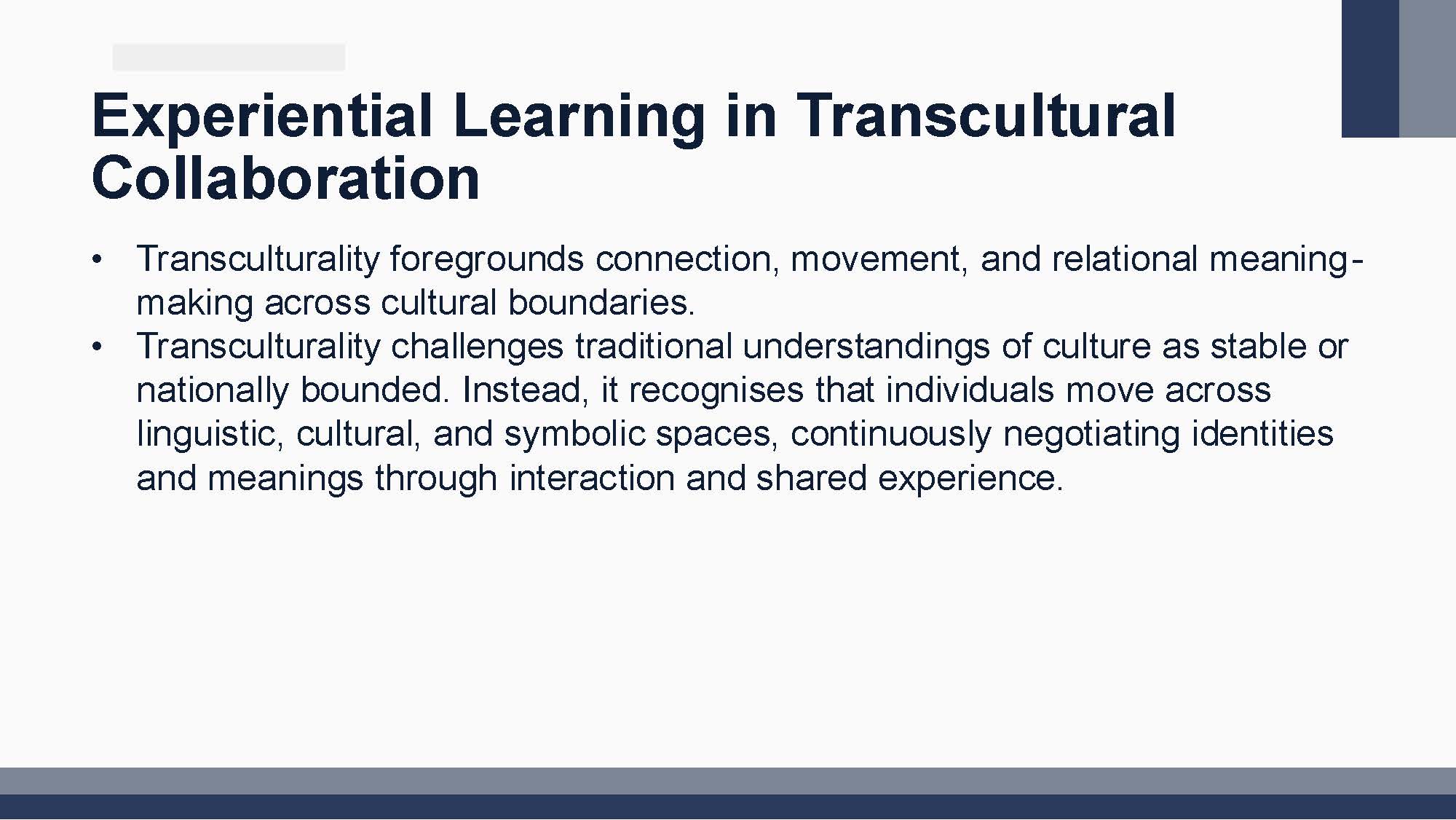
Title: Transcultural Collaboration and Translanguaging Creativity
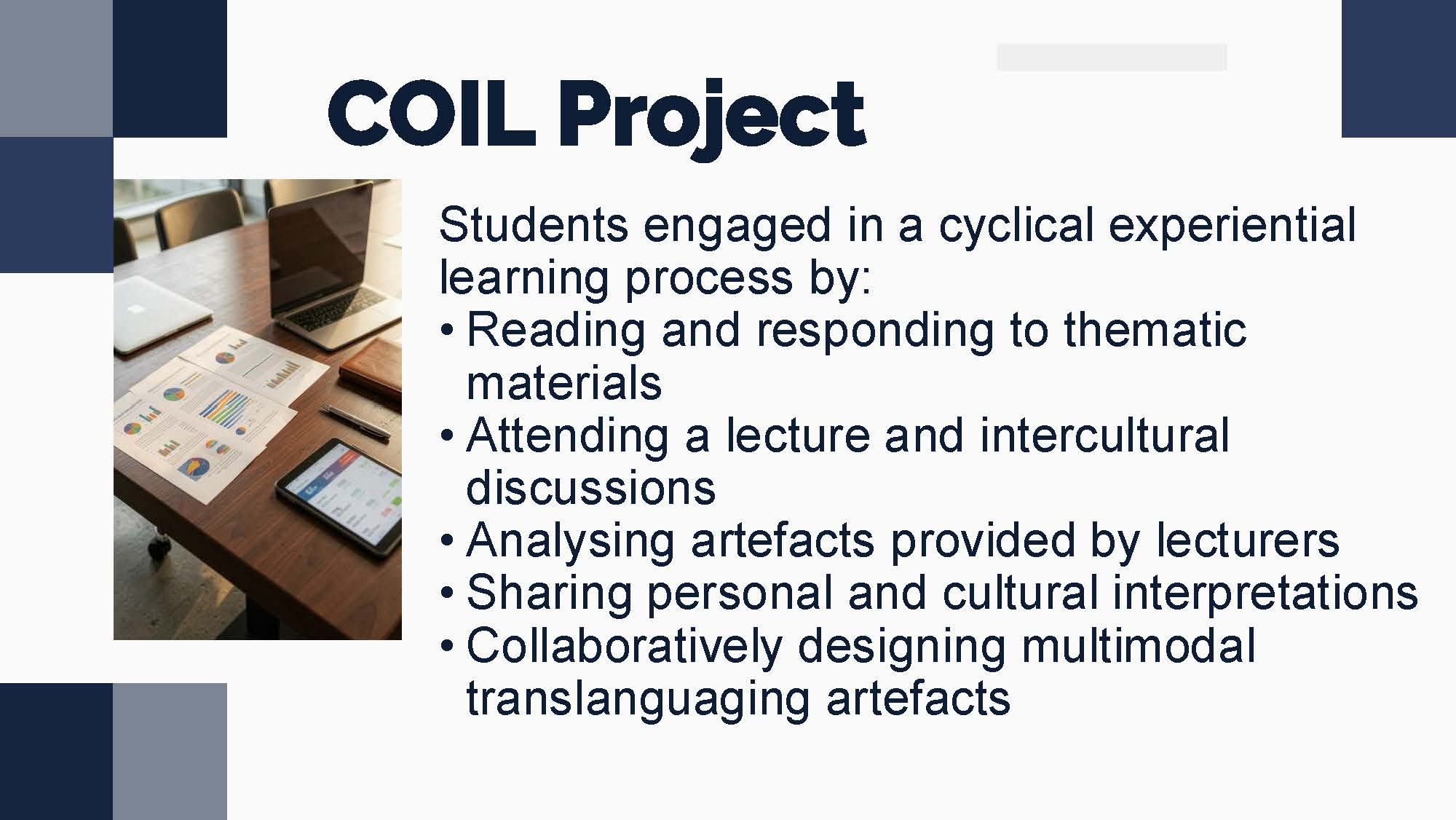
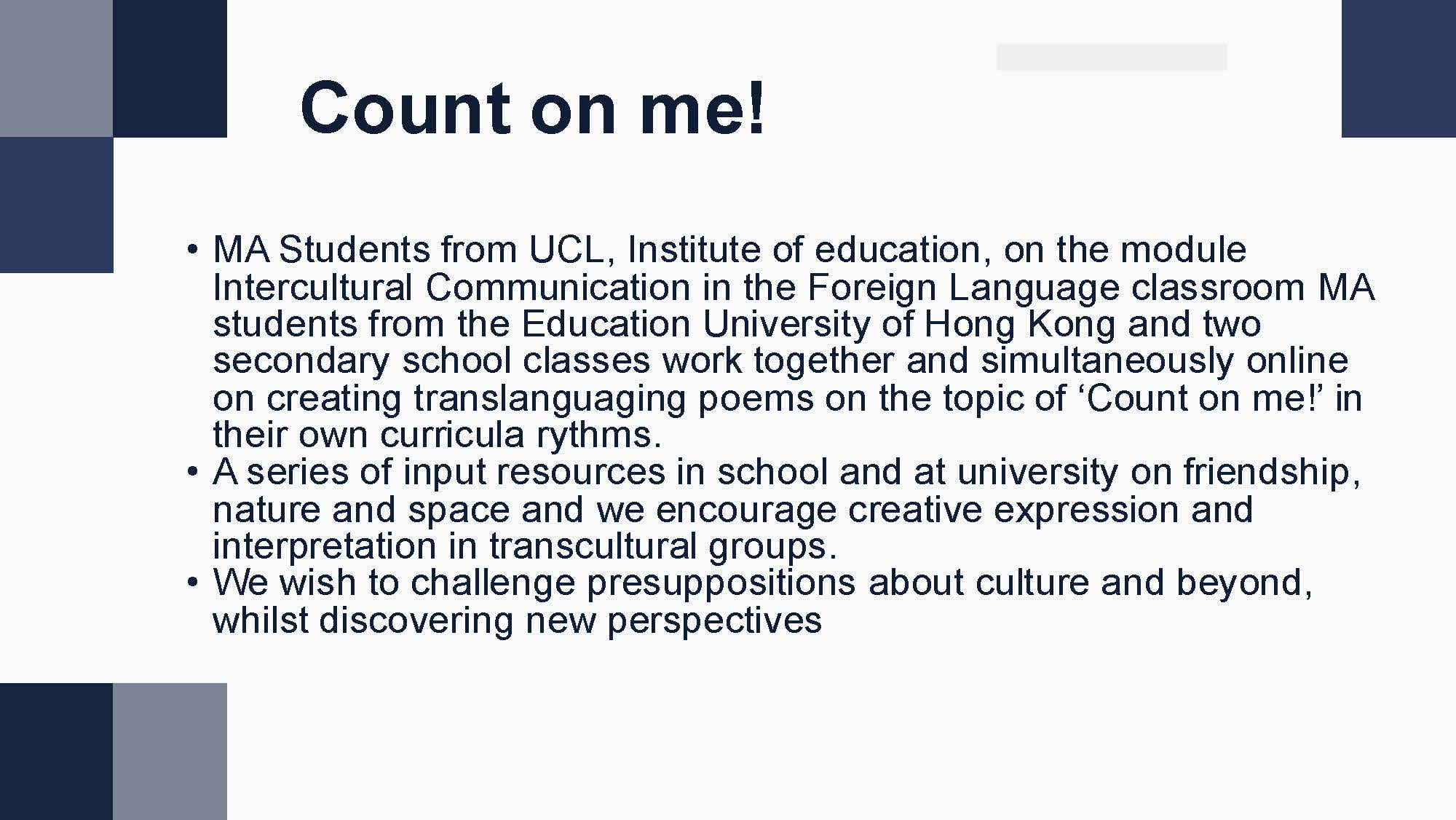
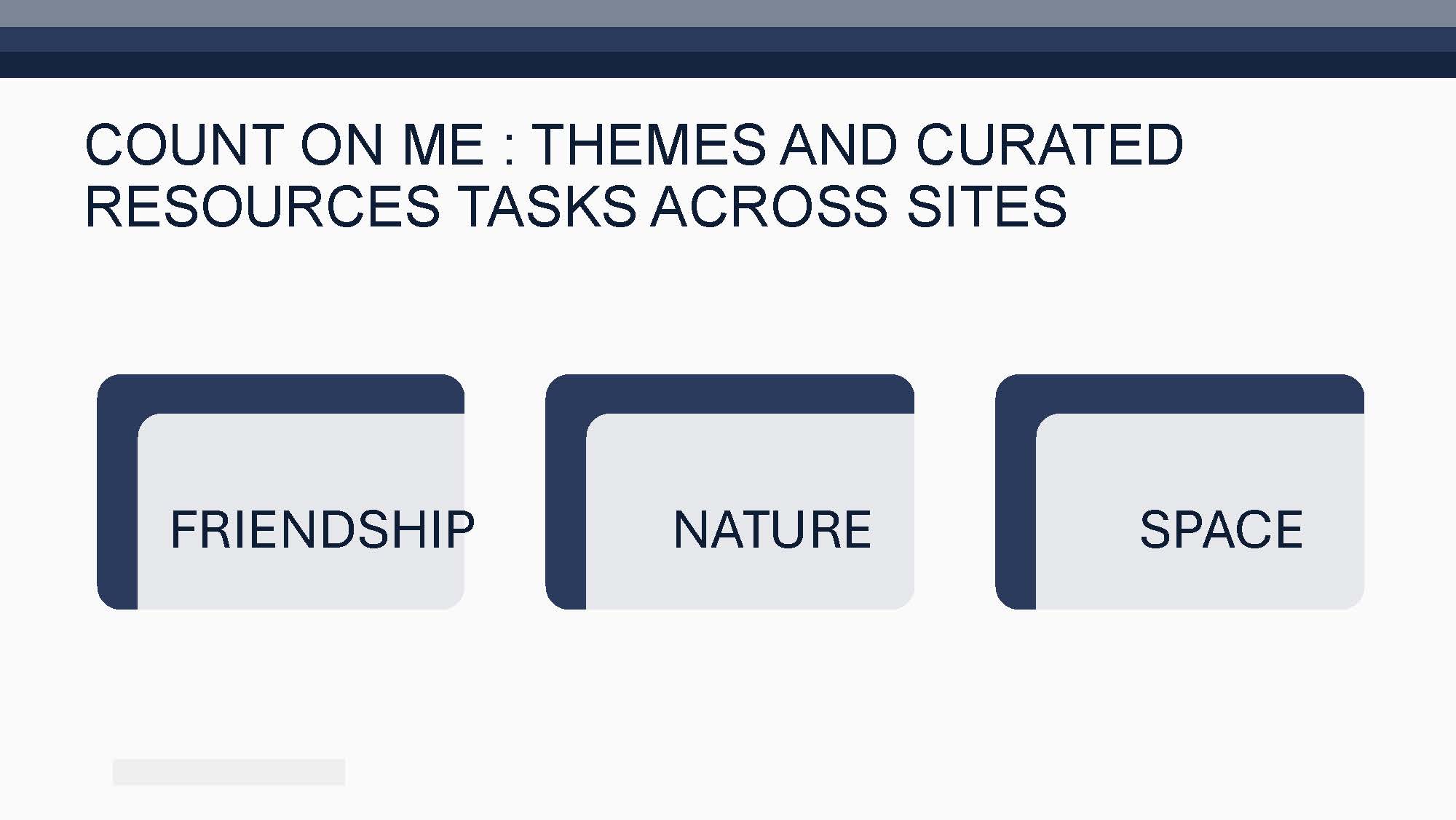
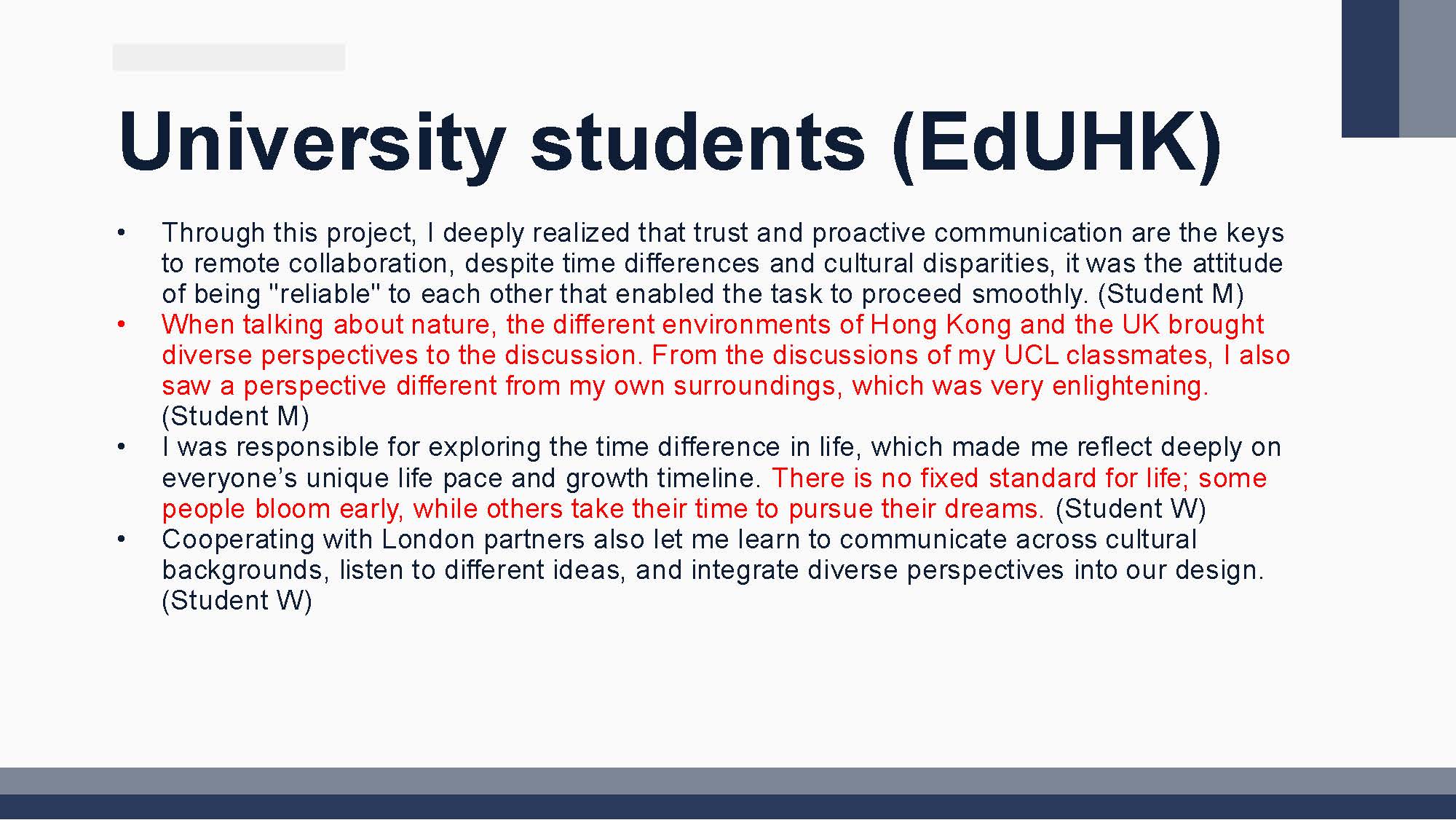
Abstract: This presentation explores how a multisite COIL project promotes intercultural understanding through translanguaging and collaborative activity. MA students and school learners from the United Kingdom, Hong Kong and Italy work in transcultural groups over a period of weeks to explore nature, friendship and space through the Topic ‘Count on me’ and their creations of multimodal artefacts. The project highlights how translanguaging through online collaboration can foster dialogic intercultural learning across school and university contexts.
Speakers:
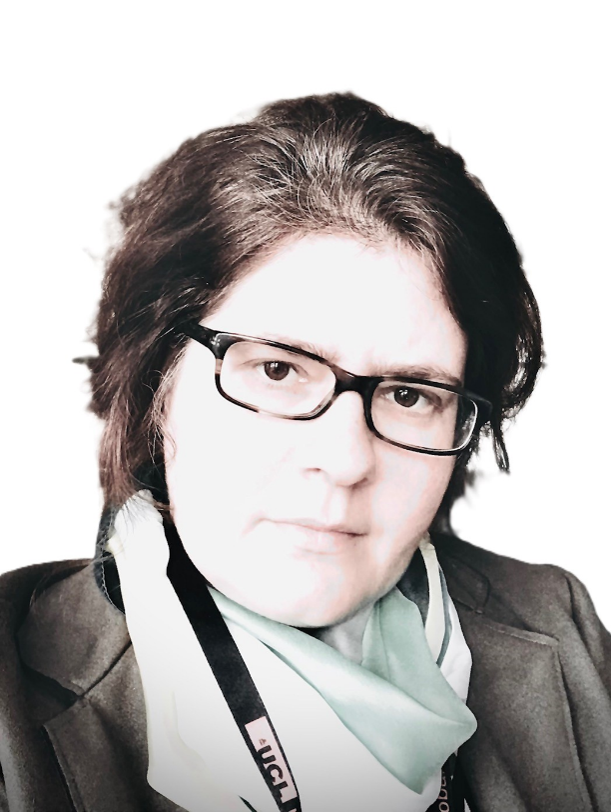
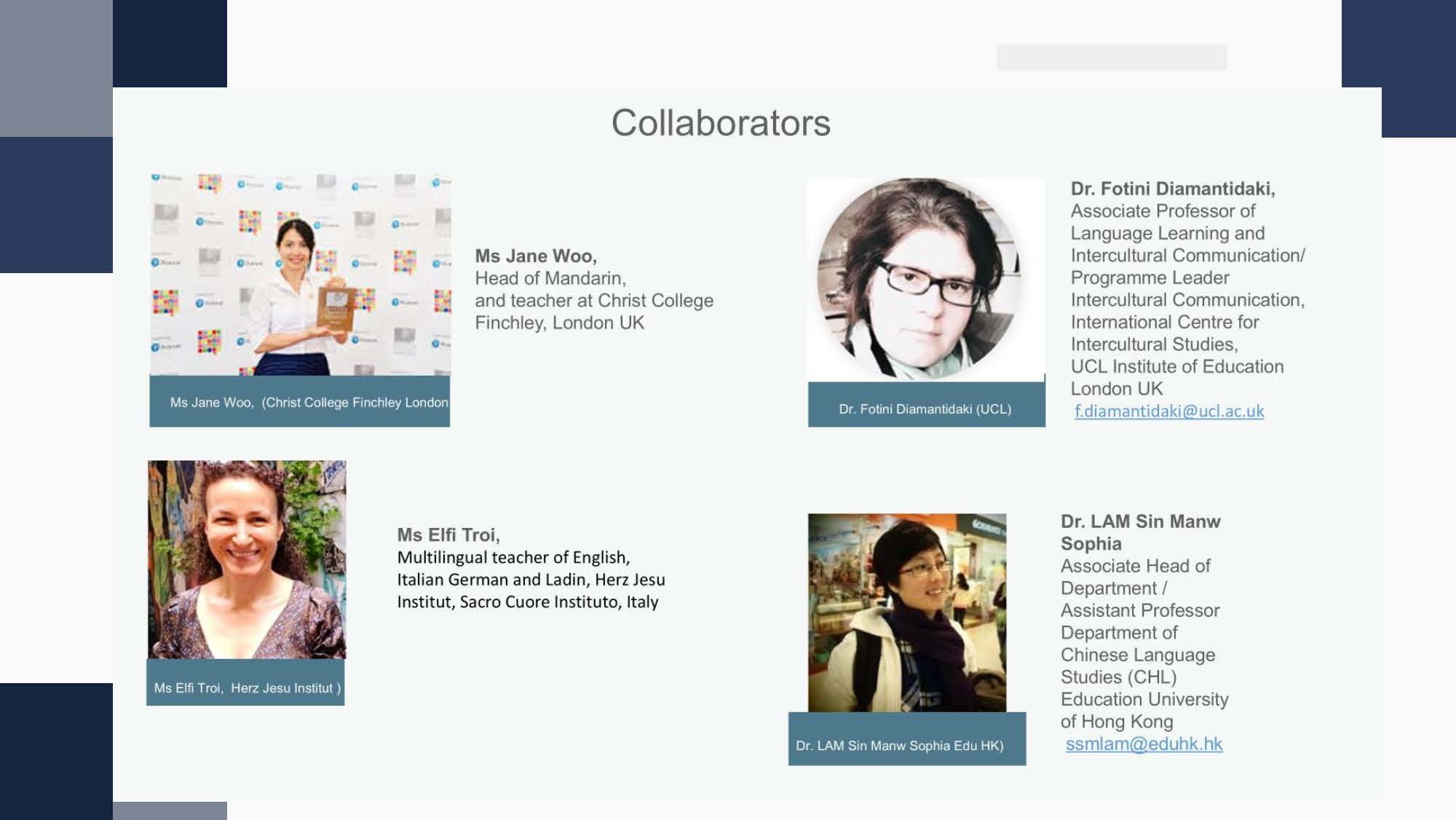
Dr. Fotini Diamantidaki
Dr. Fotini Diamantidaki is an Associate Professor in Language Learning and Intercultural Communication at UCL Institute of Education UK, I lead the MA in Intercultural Communication program while teaching modules on Language and Interculturality and Intercultural Communication in the Language Classroom. My work is aligned with the International Centre of Intercultural Studies and the Applied Linguistics Centre at UCL, where I contribute to promoting intercultural dialogue, and lead on the collaborative online international learning (COIL) projects. With over 15 years of experience in language education, I bring expertise in creative pedagogies, communication and fostering collaboration within academic and school settings. I am committed to fostering innovation and advancing global intercultural understanding and collaboration through education.
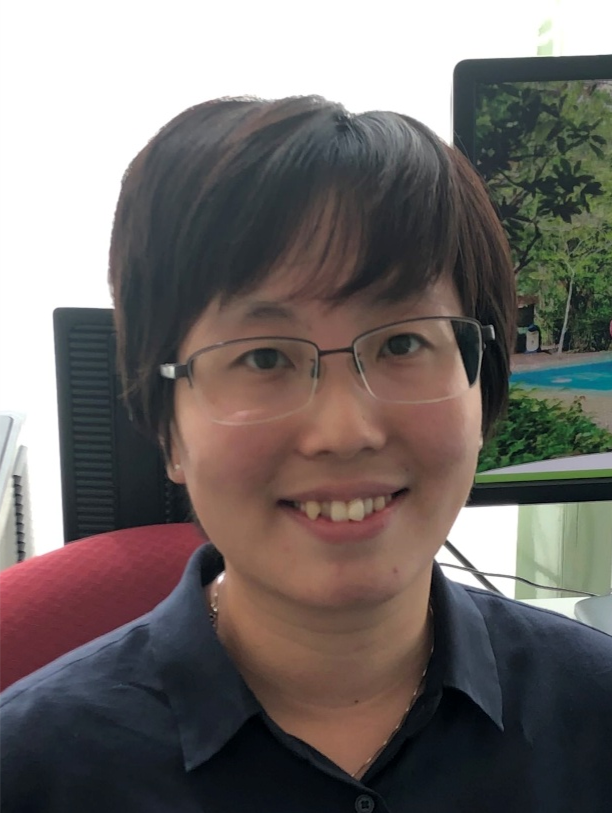
Dr. Sophia Lam
Dr. Sophia Lam is an Assistant Professor at The Education University of Hong Kong, Department of Chinese Language Studies, specialising in Chinese language education. Her research explores writing development, language learning motivation, and teacher education. She is particularly interested in fostering intercultural learning through international collaborations, and in supporting students’ engagement across diverse cultural and educational contexts.
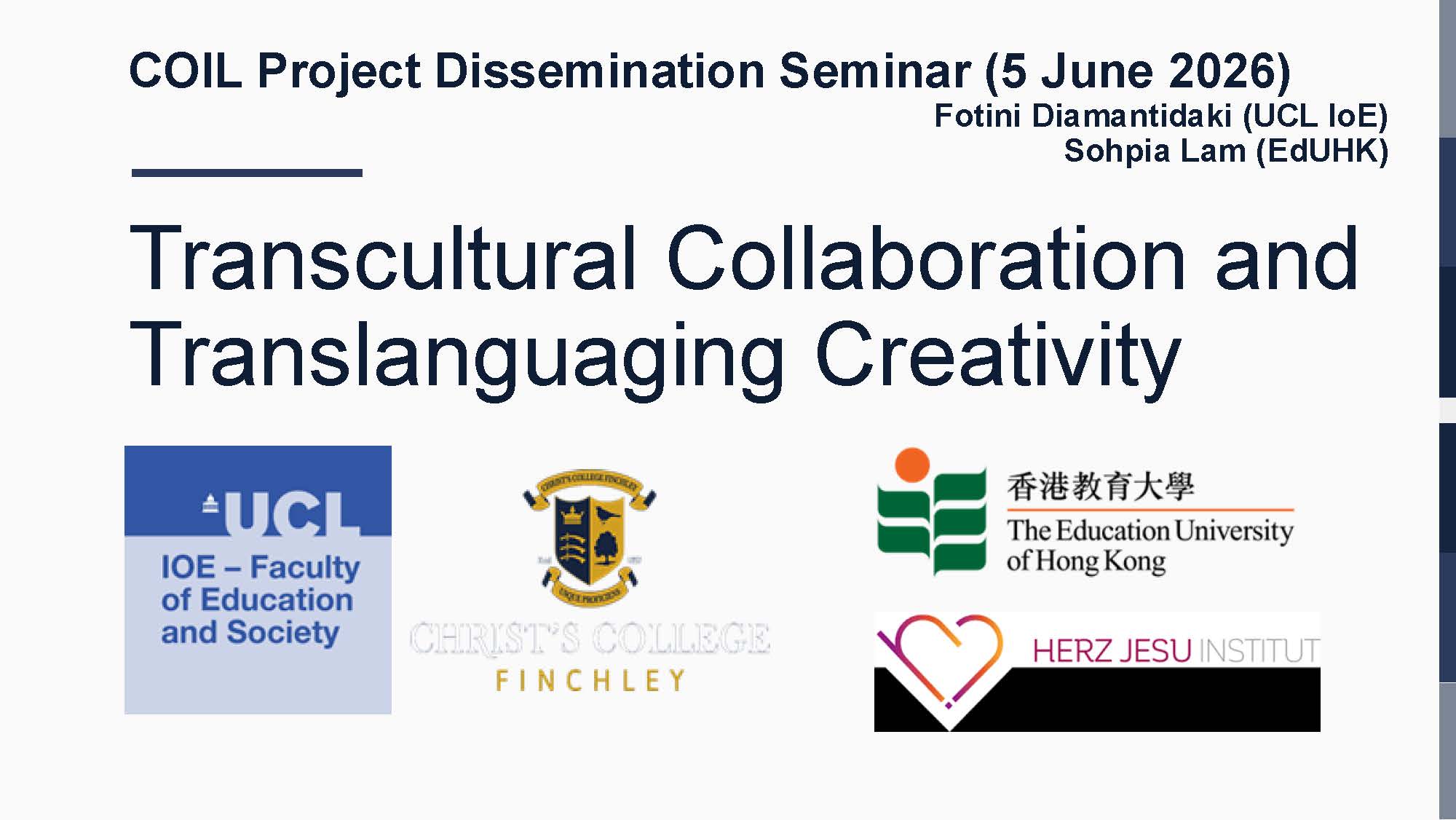
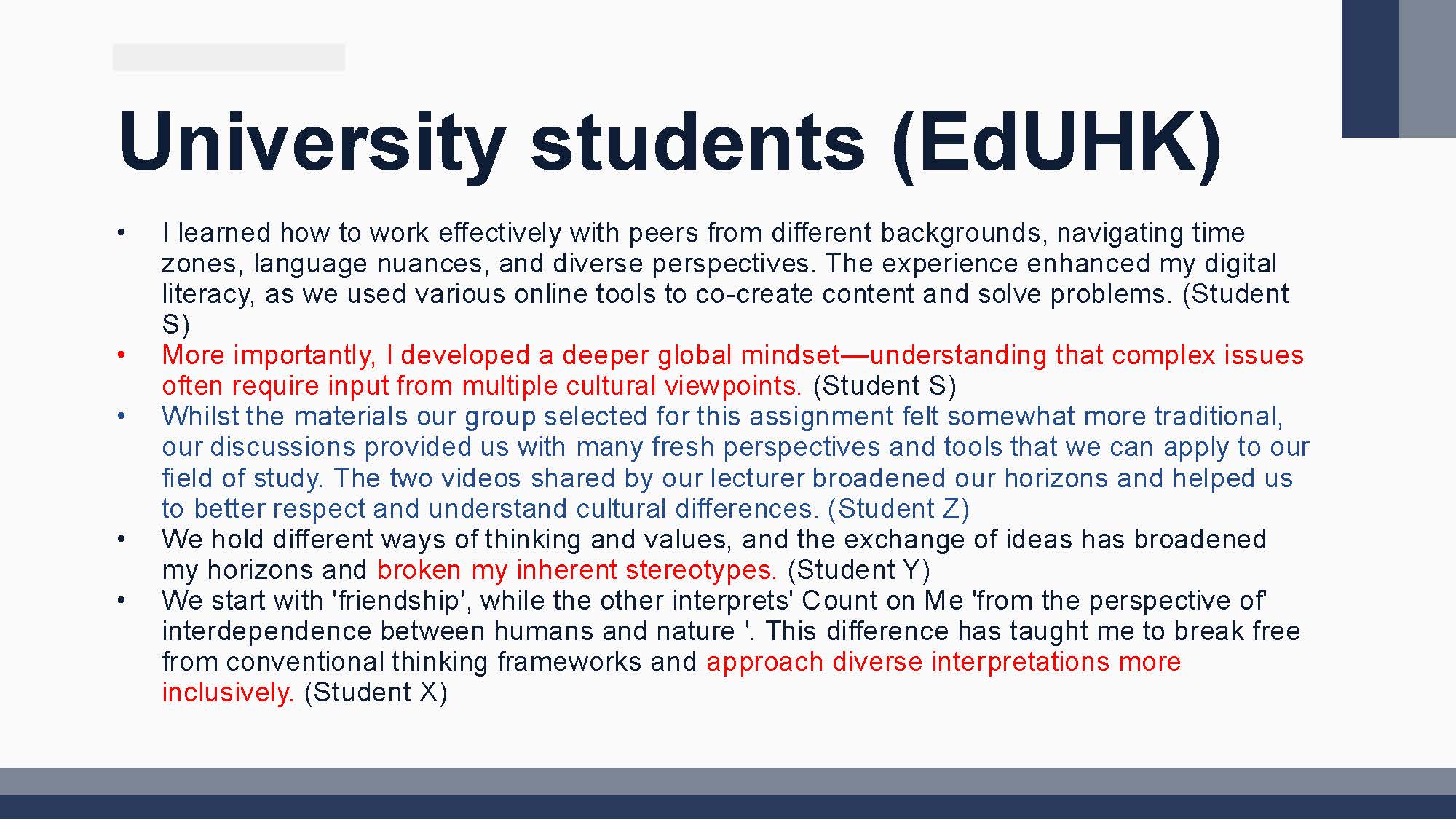
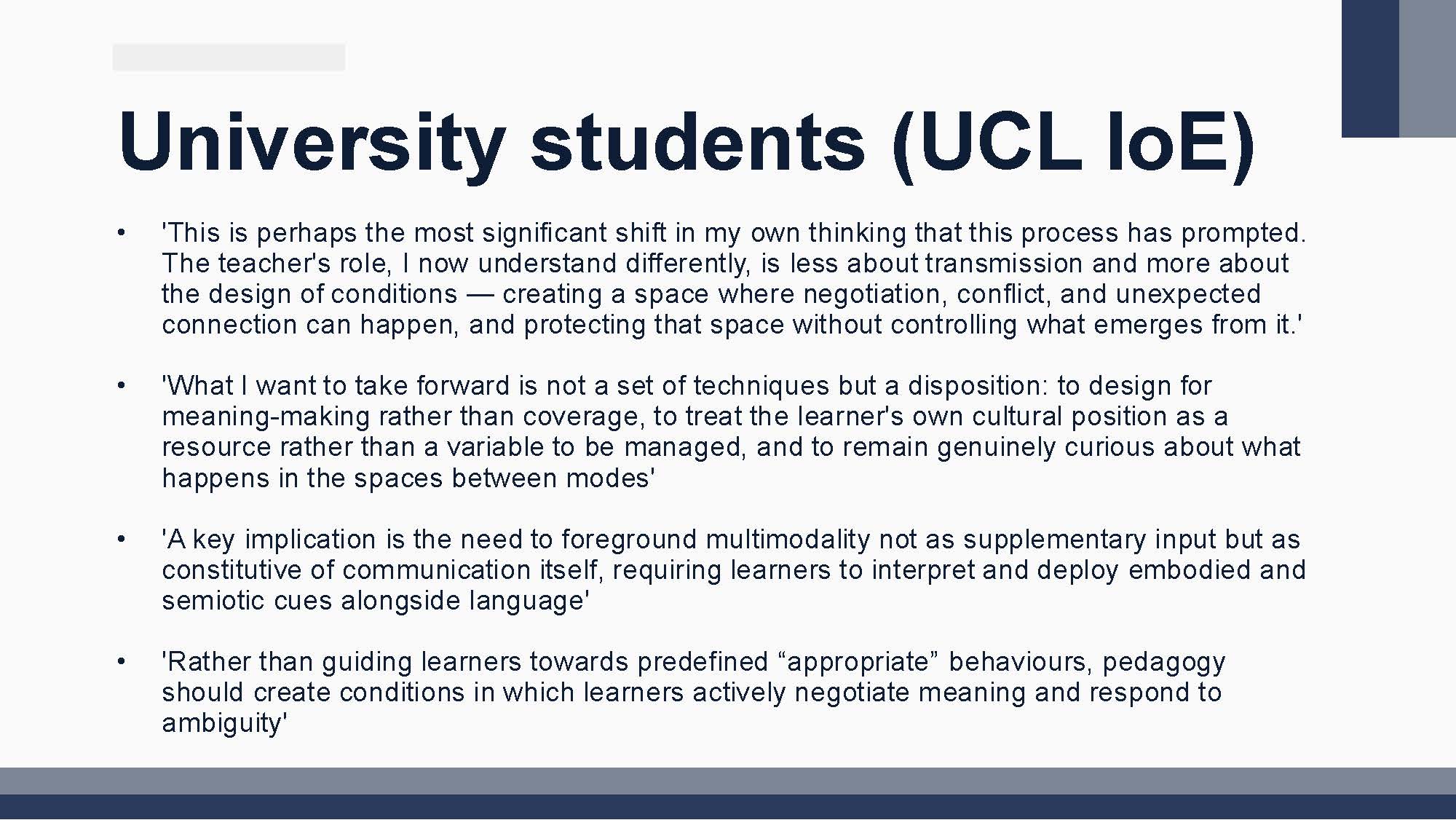
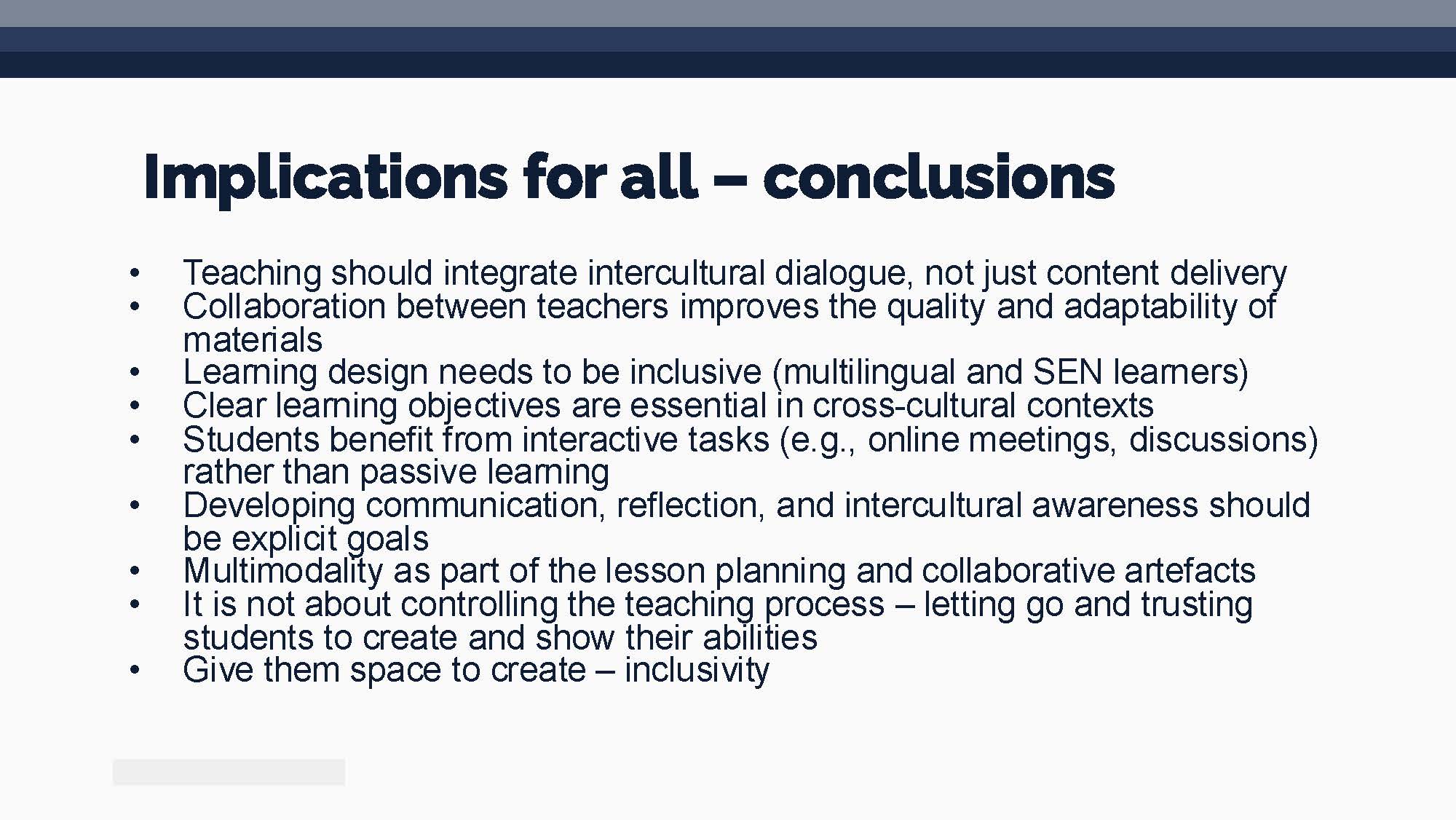
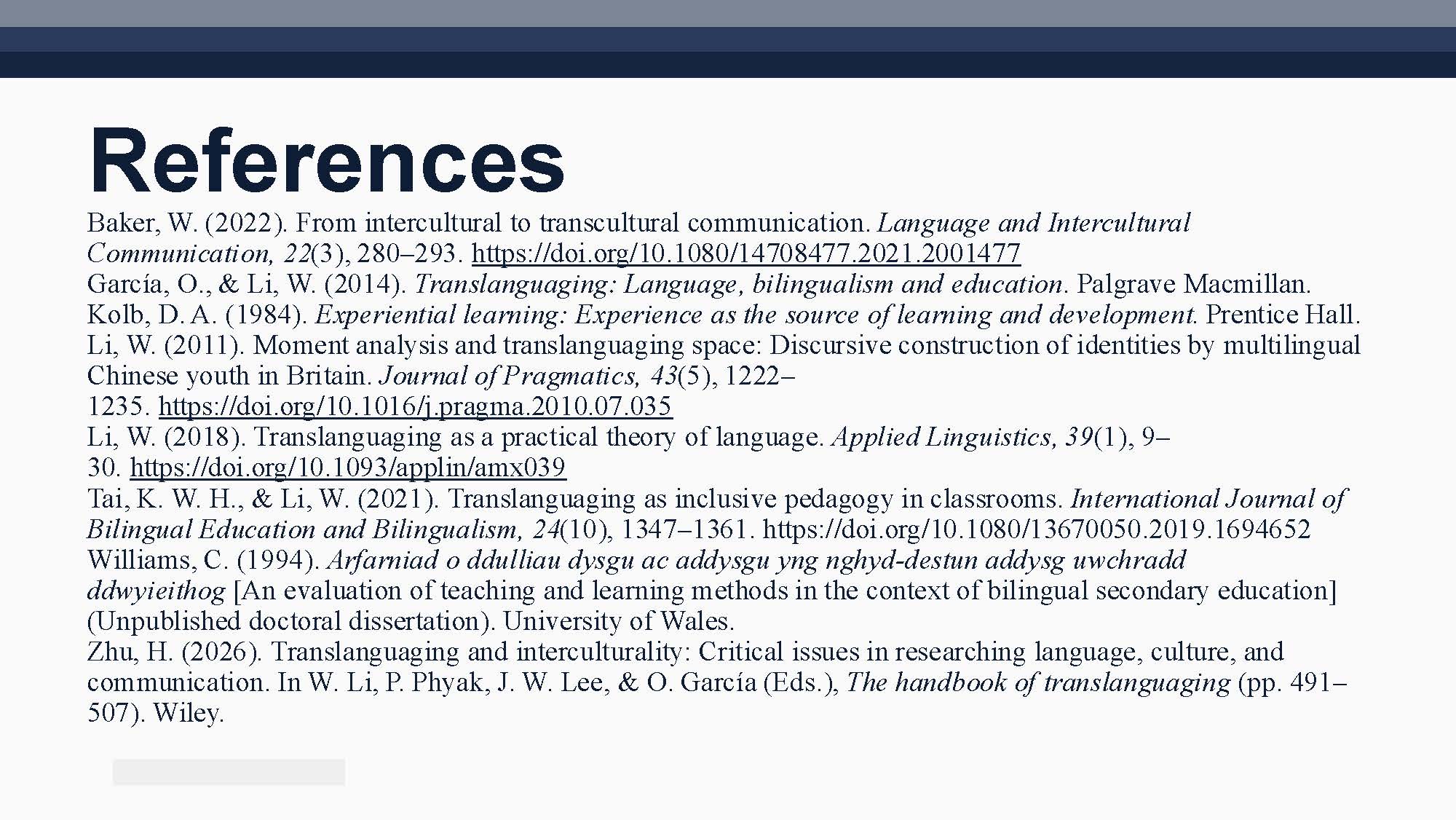
(view the presentation slides here: Dr. Sophia Lam & Dr. Fotini Diamantidaki’s Presentation Slides.pdf)