
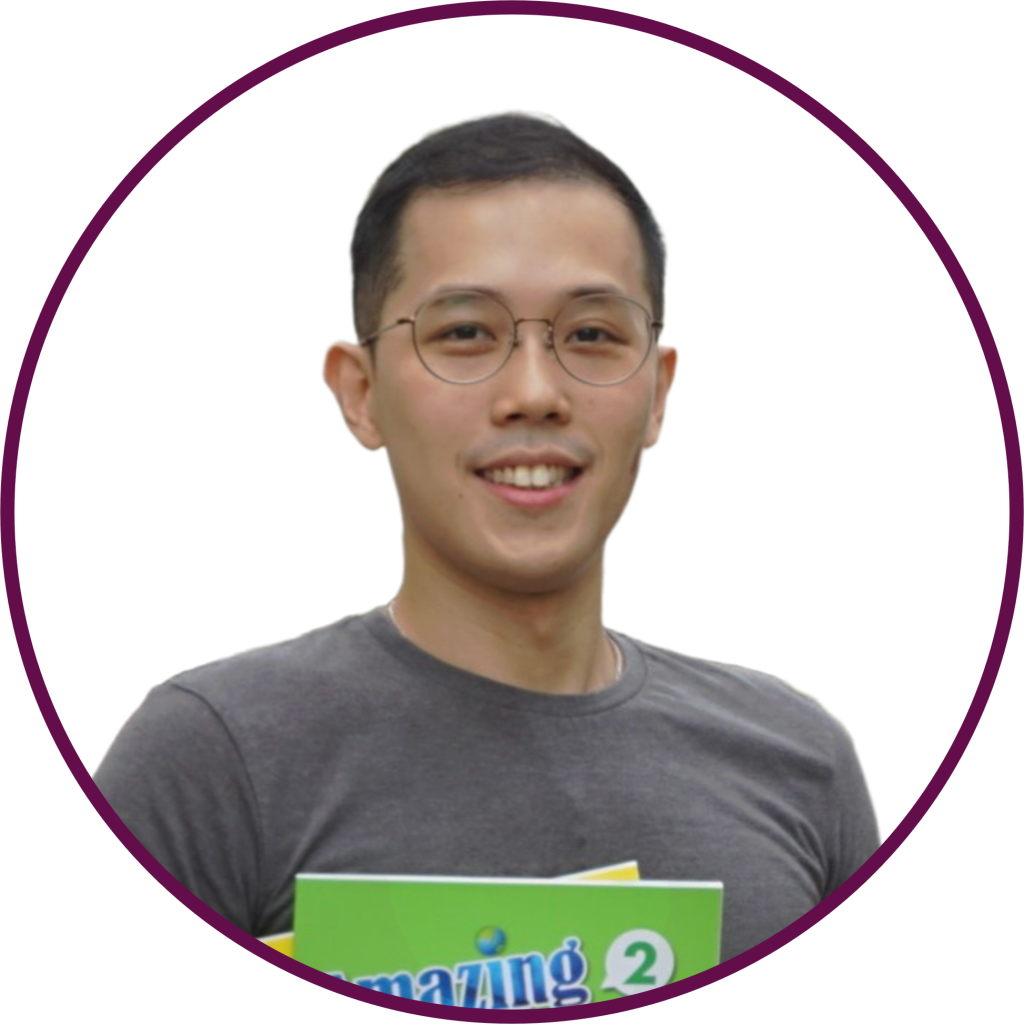
Dr. Tam Wing Yu Hugo
CHI6497 Pedagogy on International Chinese:
Phonetics, Listening and Speaking
As part of the Collaborative Online International Learning (COIL) initiative at The Education University of Hong Kong (EdUHK), CHI6497 Pedagogy on International Chinese: Phonetics, Listening and Speaking integrated an online guest lecture on Mandarin Education in Singapore delivered by Ms. Teo Jia Jia (National University of Singapore) via Zoom on 11 October 2025.
This COIL activity was designed to bring international perspectives into the classroom and to promote students’ awareness of teaching Chinese as an international language in a Southeast Asian context. After the lecture, students interacted with Ms. Teo and asked her many questions related to Singaporean culture, as well as practical inquiries about job opportunities and the current employment landscape. The materials below—including screenshots from the Zoom session and students’ feedback—demonstrate how COIL can be integrated into course activities to enhance the learning experience for graduate students.
Guest Lecture on Mandarin Education in Singapore
Ms. Teo delivered a speech on Mandarin (Huayu) education in Singapore. The presentation was divided into two parts.
The first part was an overview of Mandarin education in Singapore. She began by introducing the historical background of Singapore and Southeast Asia, then discussed the demographic composition and multilingual environment of Singapore. Not only did she introduce the ethnic Chinese community, but she also covered the second/foreign language learning needs of Malays and Indians. She briefly reviewed the history of Mandarin education in Singapore, explaining how Mandarin shifted from being a medium of instruction in Chinese schools to now being one of the mother tongue subjects taught in schools where English is the medium of instruction. Following this, she introduced the Chinese language curriculum, teaching materials, assessment for primary and secondary schools, as well as current parental expectations and pathways for further education. Lastly, she shared her experiences teaching in Singapore secondary schools, including her daily teaching tasks and administrative work, helping our master’s students understand the basic similarities and differences compared to Chinese-as-a-first-language teaching.
The second part of her presentation covered Singapore’s education system and the basic requirements for becoming a Chinese language teacher there. She discussed the role of the MOE (Ministry of Education) and her internship experience during the PGDE program. She not only encouraged students to work in Singapore but also to pursue further studies there, including research-based master’s and doctoral degrees. She emphasized the importance of teaching practice and differentiated instruction. The session concluded with a discussion moderated by Dr. Tam, exploring practical issues related to teaching in Singapore. He explained the similarities and differences between the Hong Kong and Singapore systems, encouraged graduate students to focus on Southeast Asian Mandarin variants, and discussed other Southeast Asian markets for Chinese language education.
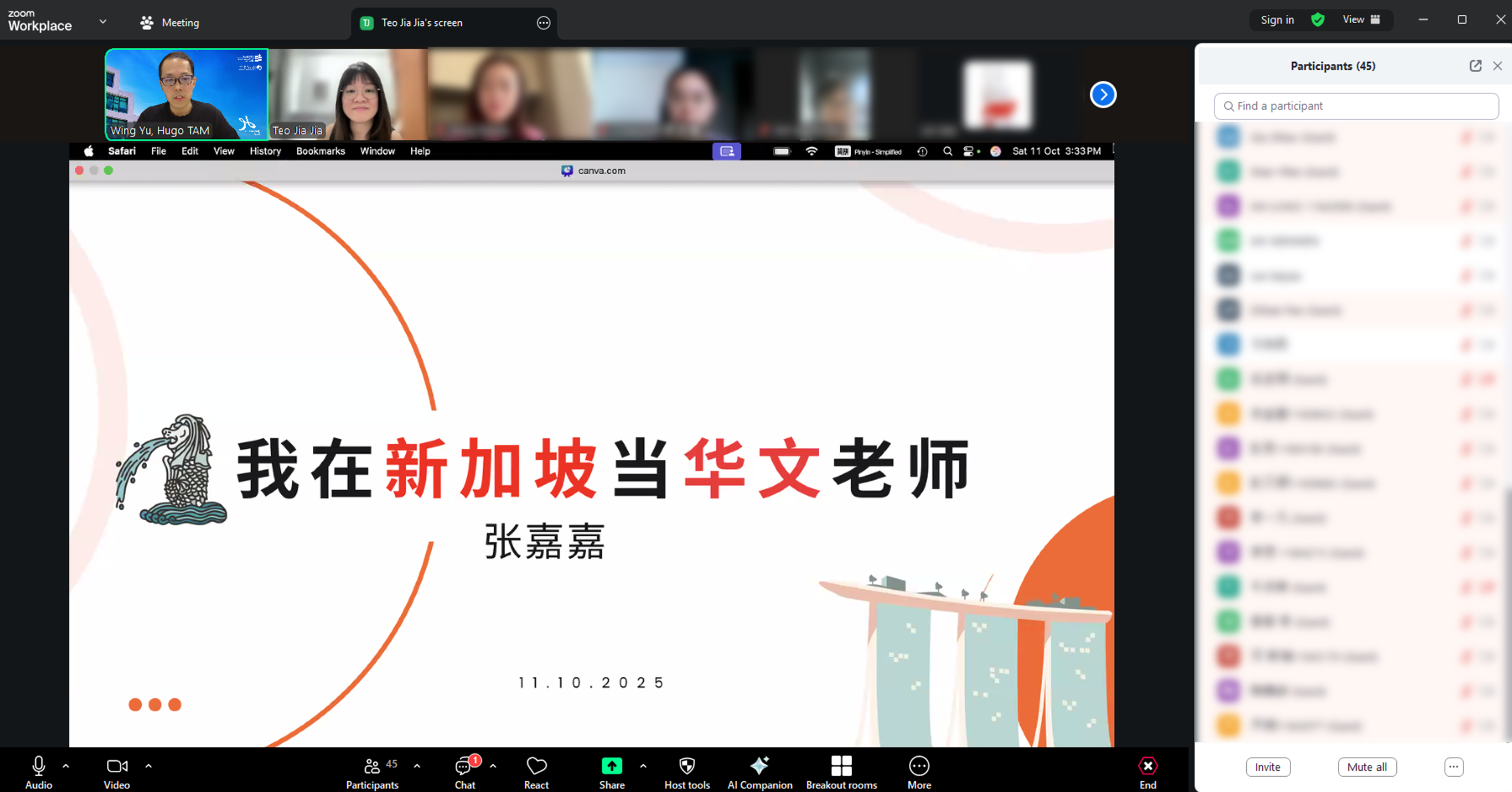
(guest lecture on Zoom)
Reflection and Evaluation
Dr. Hugo Tam’s reflection on his COIL experience:
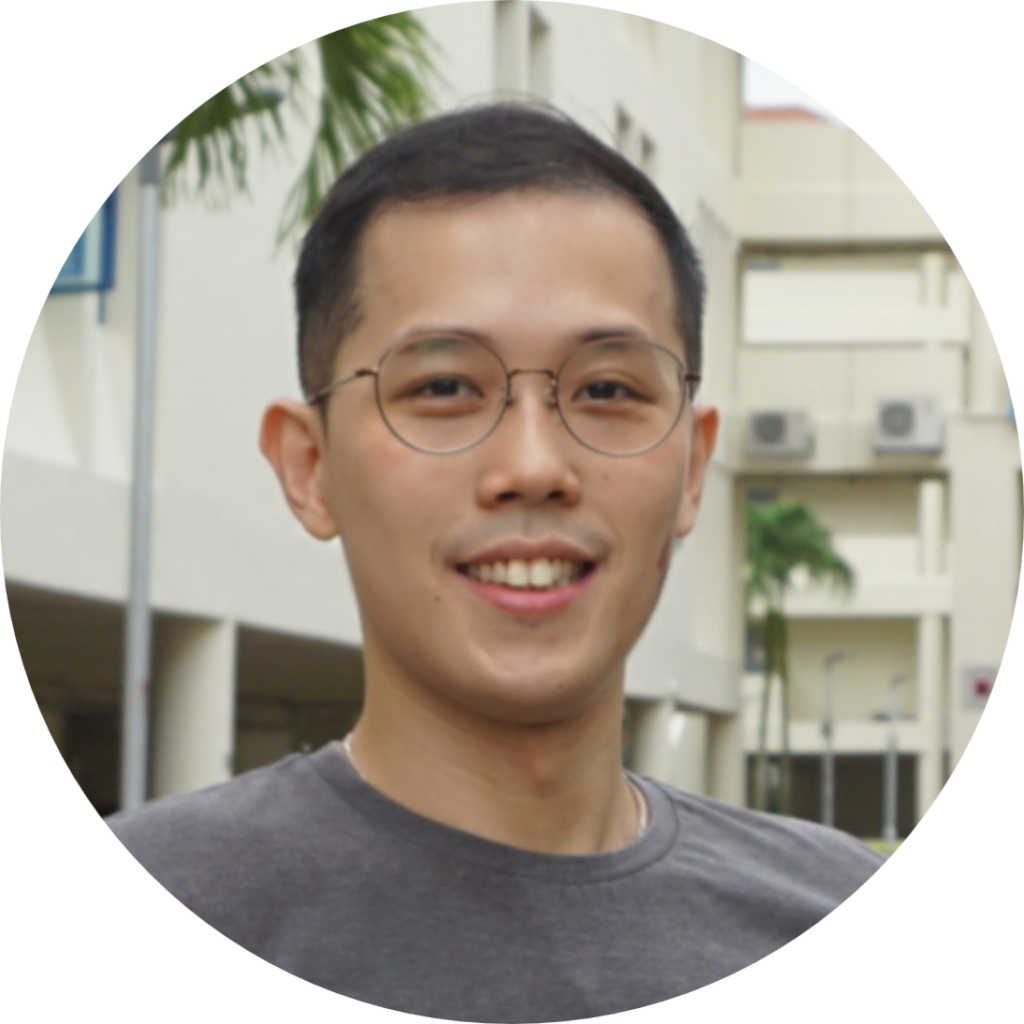
When I initially planned this course, it was primarily focused on theoretical concepts, and I was concerned that students might lack practical experience in Mandarin teaching. I am grateful for this COIL opportunity, which allowed me to invite a frontline Mandarin (Huayu) teacher from Singapore to share their insights. The MA students not only had the chance to connect the teaching methods I introduced—such as listening and speaking pedagogy—with the Singaporean context, but also gained a better understanding of the linguistic style and communication approach used by Ms. Teo Jia Jia. This experience helped students appreciate the unique sociolinguistic environment in Singapore (and Southeast Asia) more deeply.
Student A’s comments:
Ms. Teo’s lecture was rich and comprehensive. Not only did she generously share her valuable experiences as a Mandarin teacher in Singapore, but she also offered many insightful perspectives. Among them, her mention of the ‘SBB subject grouping system implemented 24 years later’ deeply impressed me—this system centers on students’ abilities and interests, creating a personalised learning environment through flexible grouping and cross-level course selection. It not only addresses the ‘one-size-fits-all’ issue of traditional class assignments but also broadens pathways for further education. In the latter part of her presentation, Ms. Teo provided detailed information about the PGDE program for Mandarin teachers in Singapore, covering application timelines and specific requirements for assessing teachers’ capabilities. These insights filled gaps in my previous understanding of preparing for careers in international public-school education and offered new perspectives for my future career planning. I sincerely thank Ms. Teo for her heartfelt sharing! (Original: 張老師本次授課內容充實豐沛,不僅傾囊分享其於新加坡擔任華文教師的寶貴歷程,更帶來諸多啟發性見解。其中,她提及的「24年後實施的科目編班SBB制度」,令我深感震撼——該制度以學生能力與興趣為核心,通過靈活分組、跨難度選課等方式,為學生營造了更自由且契合個人發展的學習環境,不僅解決了傳統編班的「一刀切」問題,更拓寬了升學選擇路徑,讓我真切領略到國際化編班模式的獨特魅力。此外,張老師課程後半段還帶來了關於新加坡華文PGDE的詳解,從申請時間到考核環節對教師能力的具體要求等內容,都讓我受益匪淺。這些資訊彌補了我此前對國際公立學校教育求職準備的認知部分空白,為我今後的職業規劃提供了全新思路。衷心感恩張老師真摯的分享!)
Student B’s comments:
I had previously visited Singapore and had some understanding of Mandarin education there, but this lecture gave me a deeper insight. Through Ms. Teo’s introduction of the MOE system’s PGDE, I learned about Singapore’s teacher policies and became aware of the teacher shortages in public schools there, which provides possibilities for my future career choices. (Original: 之前去过新加坡旅游,对那边的华文教育有一些了解,但这次张老师的讲座给了我更深刻的认识。通过老师介绍的moe体系下的pgde,了解到了新加坡的一些教师政策,也知道了新加坡公立学校的教师缺口,这为我将来的工作选择提供了一种可能性。)
Student C’s comments:
Yesterday, I was fortunate to listen to Ms. Teo’s wonderful presentation, gaining a more in-depth understanding of Singapore’s government school education system and the PGDE application process. I deeply felt the rigor of their education system and its international perspective, especially their high standards for teacher selection and training. This lecture not only broadened my educational horizons but also provided valuable reference regarding teacher development pathways and selection mechanisms. (Original: 昨日有幸聆听了张老师的精彩分享,对新加坡政府学校的教育体系及PGDE申请流程有了更深入的认识。我深刻感受到其教育系统的严谨性与国际化视野,尤其是对教师选拔和培养的高标准要求。此次讲座不仅拓宽了我的教育视野,关于教师发展路径和筛选机制的内容也为我提供了宝贵的借鉴。)
Student D’s comments:
Thanks to Dr. Tam for organising the employment guidance seminar. The sharing from frontline Mandarin teachers in Singapore was rich and substantial, giving me a clear understanding of the career prospects, work content, and application requirements for teaching Chinese abroad. Particularly, the discussions on PGDE and Mandarin textbooks, along with Ms. Teo’s valuable experience, greatly expanded my horizons and boosted my confidence in pursuing this career. (Original: 感谢谭老师精心组织的就业指导讲座。来自新加坡一线中文教师的分享内容丰富充实,让我对海外中文教学的职业前景、工作内容及应聘要求有了清晰认识,特别是pdge和华文课本的分享,张老师的宝贵经验极大地开阔了我的视野,也增强了我的职业信心,受益匪浅。)
Student E’s comments:
Ms. Teo shared a lot of useful information, including detailed experiences of teaching in Singapore, the local student situation, and the class grouping system. She selflessly shared her journey through internship to full employment, as well as her teaching and student interaction experiences, helping us gain a general understanding of Singaporean schools. She also discussed the specific differences between PGDE in Singapore and Hong Kong with Dr. Tam, adding a new option for career planning. (Original: 张老师分享了很多有用的信息,详细介绍了在新加坡当老师是怎样的体验,当地学情和分班制度,无私分享了自己实习到最后通过的经历,还有自己的授课经验和学生相处的经验,帮助我们对新加坡学校有了大致的了解。并跟谭老师讨论了对于新加坡和香港的PGDE的具体区别,多了一条职业规划的选择。)
Student F’s comments:
I gained a very detailed understanding of Ms. Teo’s experiences working in Singapore and realised that Singaporean students’ academic paths differ from those in China. Most importantly, I learned some useful tips for seeking employment in international schools in Singapore, which was very insightful! The most memorable part was Ms. Teo’s sharing that non-credit Mandarin teaching is a significant challenge for teachers, requiring more effort in responding to students’ feedback. (Original: 很詳細的了解了張老師在新加坡任職的一些經驗,也明白新加坡的學生不同於大陸學生的升學路徑,最重要的是瞭解到想要在新加坡國際學校求職的一些小tips,很有感悟!印象最深的是,張老師分享的不算學分的漢語教學對於教師來說是一個很大的挑戰,教師需要花更多的心思在學生的反饋上。)
Student G’s comments:
Thank you, teachers, for your sharing. In teaching, it is important to focus on engaging and fun approaches (such as stories and cultural activities) to stimulate students’ interest. Attention should be given to individual differences; if students’ levels vary significantly, group discussions can be considered. At the same time, language instruction should emphasise conveying cultural connotations, as the transmission of values is very important. The role of language as a bridge for cultural exchange should be actively utilised. (Original: 感謝老師的分享,上課要注重趣味化形式(如故事、文化活动)激发学生兴趣;要关注个体差异,如果學生水平差異較大,可以考慮group discussion;同时,教授语言应注重传递文化内涵,價值觀傳遞很重要,发挥语言作为文化交流纽带的作用 。)