
Dr. Song Ge
ENG2336 Intercultural Communication
As part of the Collaborative Online International Learning (COIL) initiative at The Education University of Hong Kong (EdUHK), ENG2336 Intercultural Communication integrated a semester-long collaborative group project with students from Meijo University, Japan, in the 2025-26 Semester 1. This COIL activity was designed to move students beyond the theoretical frameworks of intercultural communication and immerse them in the authentic, often unpredictable, practice of it. By embedding a structured, sustained collaboration directly into the curriculum, the course created a living laboratory where concepts like cultural adaptation, verbal and non-verbal communication differences, and politeness strategies were no longer abstract textbook chapters but daily realities to be navigated. Over several weeks, mixed student groups from Hong Kong and Japan engaged in synchronous and asynchronous collaboration to research, create, and deliver a joint video presentation. This process, from initial awkward introductions to final coordinated output, formed the core experiential learning journey of the semester. The materials and reflections below serve as an exemplar of how a carefully orchestrated, long-term COIL project can cultivate profound intercultural competence and provide a replicable model for meaningful global classroom integration.
Collaborative Project on Intercultural Communication in Practice
1. Project design and philosophical underpinnings
The centrepiece of the COIL experience was a meticulously designed “joint video presentation project”, which accounted for 30% of the final grade. This was not a simple add-on task but the pedagogical spine of the semester, carefully woven into the weekly schedule and learning objectives. The project’s philosophy was clear from its conception: to simulate a real-world global collaboration where success is measured not by perfection, but by effective navigation of complexity. In preparatory discussions with the partner at Meijo University, it was explicitly acknowledged that Japanese students might have varying levels of English proficiency. Rather than seeing this as a hurdle, Dr. Song Ge urged his students to use it as a golden learning opportunity. Students were guided to understand that the challenge of bridging this communication gap was, in fact, the essence of the intercultural communication process they were studying. This proactive expectation management transformed potential frustration into engaged problem-solving, encouraging students to employ empathy, clarity, and creative workarounds. These are precisely the skills required in international professional settings.
The project began with “group formation and initial contact” in the early weeks, establishing the basic framework for partnership. This was followed by a crucial “cultural exchange phase” in Weeks 7 to 9, where groups were required to meet informally at least three times before knowing their presentation topic. These meetings served a vital dual purpose: they were trust-building exercises to overcome initial hesitancy, and they provided raw, experiential “data” on communication styles, such as the noted tendency for Hong Kong students to be more direct while Japanese peers might communicate more indirectly. Only after this relational foundation was laid were the research or presentation topics assigned. This was followed by intensive collaborative work where students had to coordinate research, scripting, and video production across borders and time zones.
2. Implementation and collaborative dynamics
The implementation of the project showed a seamless blend of pedagogical intent and practical logistics. Coordination between the two institutions was paramount. Following a detailed timeline agreed upon in pre-semester Zoom meetings, Dr. Song Ge finalized student groups and collected contact information by Week 4, which was then transmitted to the partner instructor Prof. Saya Ike at Meijo University. There, Japanese students were assigned to the international groups. This cross-institutional matching resulted in the formation of approximately 40 multicultural teams, typically comprising three to four Japanese students and one to two Hong Kong students each. A comprehensive Excel spreadsheet served as the master document for this large-scale logistics operation, ensuring every student was correctly linked to their international peers.
The collaborative work itself became a practical lesson in the course content. Students encountered firsthand the realities of time-zone management between Hong Kong and Japan, which required negotiation and flexibility when scheduling meetings. They practiced “digital collaboration”, using tools like Zoom and WhatsApp for synchronous discussion and likely shared drives for asynchronous work on presentation slides. When instructions or ideas were unclear, they had to deploy clarification strategies. Dr. Song Ge also needed to deal with both his students’ inquiries and Meijo University’s concerns. When dividing tasks, students from both sides had to be mindful of different academic norms and workloads. The guideline that the video should be “lively and interactive” and preferably live-recorded pushed them beyond a stilted, slide-reading format towards genuine co-performance. This process demands a higher level of mutual understanding and coordination.
3. Supporting materials and project framework
The success of such a complex, multi-party project hinged on providing students with clarity and support. The primary resource was the “detailed course schedule and assessment description”, which acted as a reliable road map. Students could see at a glance the critical milestones: the week for forming local groups, the deadline for submitting contact details, the precise three-week window for mandatory cultural exchange meetings, the date the research topics would be released, and the final submission deadline for the video. This transparency reduced anxiety and allowed students to plan their semester effectively, a crucial element for managing a long-term project alongside other academic commitments. Another focused specifically on the video presentation specifications, concisely summarizing key requirements such as the preference for live recording, the technical setup of having the presenter’s face visible, the prohibition against reading from a script, and the time allocation of approximately two minutes per speaker. These visuals served as quick-reference guides that reinforced the written guidelines and helped standardize expectations across all groups.
Furthermore, the “assessment ecosystem” around the project was designed to reinforce deep learning. While the group video was a shared output, the grading philosophy emphasized individual growth. This was achieved by linking the collaborative experience directly to two significant individual assessments. The short essay, due shortly after the collaborative phase began, allowed students to apply intercultural theories to a topic of their choice, potentially priming them to analyze their ongoing group interactions. More powerfully, the e-portfolio, worth 40% of the grade, required students to critically analyse a cross-cultural communication issue encountered during the group work. This created a powerful pedagogical loop: the project provided the lived experience, and the e-portfolio provided the space for structured, theoretical reflection on that experience. Students were deconstructing and learning from it. As a result, they cemented the theoretical concepts covered in lectures.
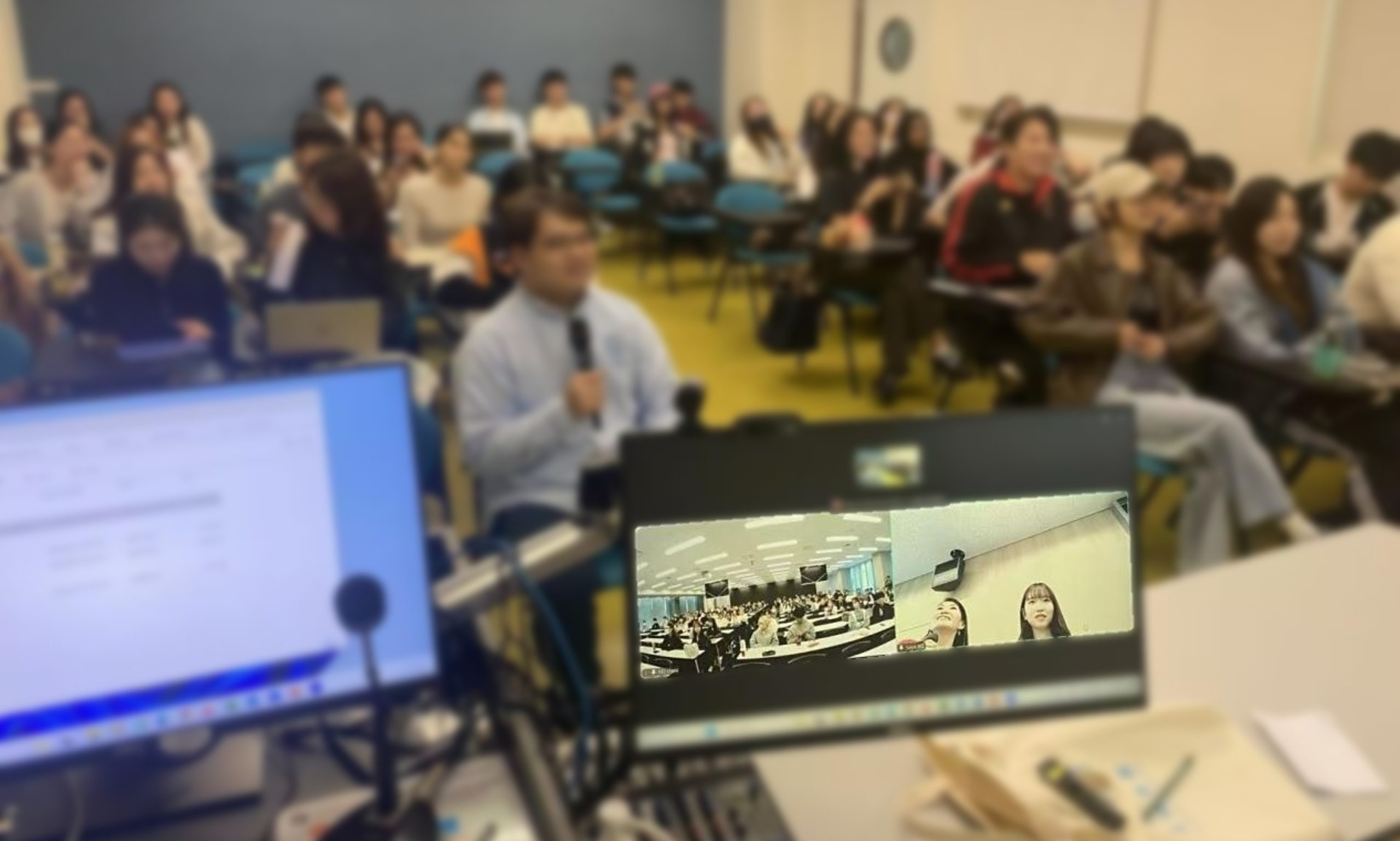
(Zoom meeting with Japanese students on 3 November 2025)
Reflection and Evaluation
Dr. Song Ge’s reflection on his COIL experience:
The COIL project transformed the course from a transmission of knowledge into a facilitation of experience. The most significant shift was in the classroom dialogue. Before the group meetings began, student questions were theoretical, such as what is high-context communication, and what constitute non-verbal communication. After they started working with their Japanese partners, the questions became applied and personal. For example, one student asked: “My group seems hesitant to give direct feedback; how can I encourage open discussion without causing loss of face?” This change in the nature of their inquiry marked the real learning moment. The preparatory work with the Meijo University partner was indispensable, because it ensured both sides viewed the challenges as core learning content. The logistical management, particularly using the centralized spreadsheet for group coordination, was vital for smooth operation, but the true reward was observing students develop resilience and adaptive strategies, moving from a focus on “getting the task done” to “understanding our partner”.
Comments from Prof. Saya Ike, Meijo University, Japan:
This month, students are watching each other’s presentations and evaluating them. They have reported that each presentation has some good points and they have learned something new about sustainability, so I think the project was a great success.
Looking at students’ feedback, each student learned more about the importance of collaboration and adjustments to new communication styles than just using correct English. They were inspired by EduHK students’ sincere attitudes towards the project, they loved their honesty, and they became more confident in their English abilities. Students also reported that the length of the project, more than 6 weeks, helped them establish friendships even online. Some students told me they already made a promise to meet up in Japan next year!