

Prof. Wang Lixun
ENG1324 Introduction to Linguistics
As part of the Collaborative Online International Learning (COIL) initiative at The Education University of Hong Kong (EdUHK), ENG1324 Introduction to Linguistics integrated an online guest lecture on World Englishes delivered by Dr. Marc Xu (Monash University) via Zoom on 28 November 2025. This COIL activity was designed to embed international perspectives directly into course delivery and to foster students’ global awareness of English as a diverse, international language. Following the lecture, students engaged with Dr. Xu through an online discussion forum, where they posted questions and received in-depth responses that further deepened their understanding. The materials below—including screenshots from the Zoom session, selected lecture slides, and excerpts from the discussion forum—serve as an exemplar of how COIL can be implemented at course level to enrich undergraduate learning experiences.
Guest Lecture on World Englishes
- World Englishes: Models and Translanguaging Practices
Dr. Marc Xu delivered a lecture on World Englishes, focusing on the conceptual models used to describe their diversity and on the translanguaging practices of speakers from different English varieties. He began by sharing his own personal and professional experiences across Braj Kachru’s three concentric circles: the Inner Circle, Outer Circle, and Expanding Circle. The lecture traced the brief history of World Englishes as a field, noting key milestones such as H. L. Mencken’s early use of the term “Englishes” in 1910 and Kachru’s development of the three-circle model in the 1960s. Various analytical models were introduced, including the map, circle, and cycle models, alongside more contemporary taxonomies. Throughout the lecture, Dr. Xu emphasized the importance of recognizing and connecting through diverse varieties of English rather than seeking to correct them.
- World Englishes: Evolution and Pedagogical Implications
The discussion then shifted to the evolution of World Englishes as a discipline, highlighting its progression from a monocentric to a pluralistic perspective. Dr. Xu underscored the significance of translanguaging and the post-variety approach, which acknowledges the dynamic and fluid nature of English in use. He also introduced a transmedia framework to better capture the multifaceted reality of global English practices. To conclude on a reflective and personal note, he shared a song composed by one of his Monash University students, which reflected on the experience of using English as a second language and the theme of transcultural creativity. The session concluded with a facilitated discussion led by Prof. Wang Lixun, addressing pedagogical questions about balancing language standards in teaching and assessment. Dr. Xu explained how contemporary assessment methods are gradually adapting to recognize diverse English varieties while still maintaining communicative standards.
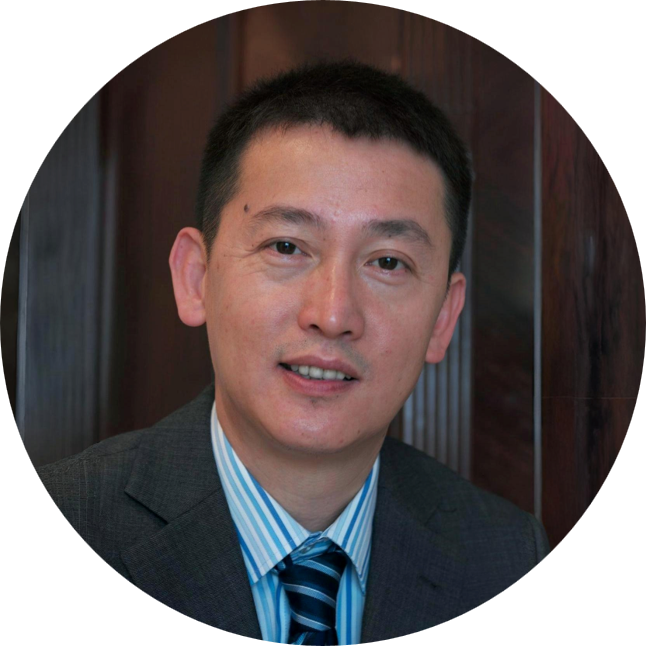
Dr. Xu Zhichang Marc
Monash University, Australia
Dr. Xu Zhichang Marc is Associate Professor of Linguistics and English Language at the School of Languages, Literatures, Cultures and Linguistics (LLCL) in the Faculty of Arts, Monash University, Australia. He also serves as Associate Editor of English Today (Cambridge University Press). He has teaching and research experiences in Beijing, Perth, Hong Kong, and Melbourne. His research involves applied linguistics, world Englishes, English as a lingua franca, cultural linguistics, language education, and translation studies.

(guest lecture on Zoom)
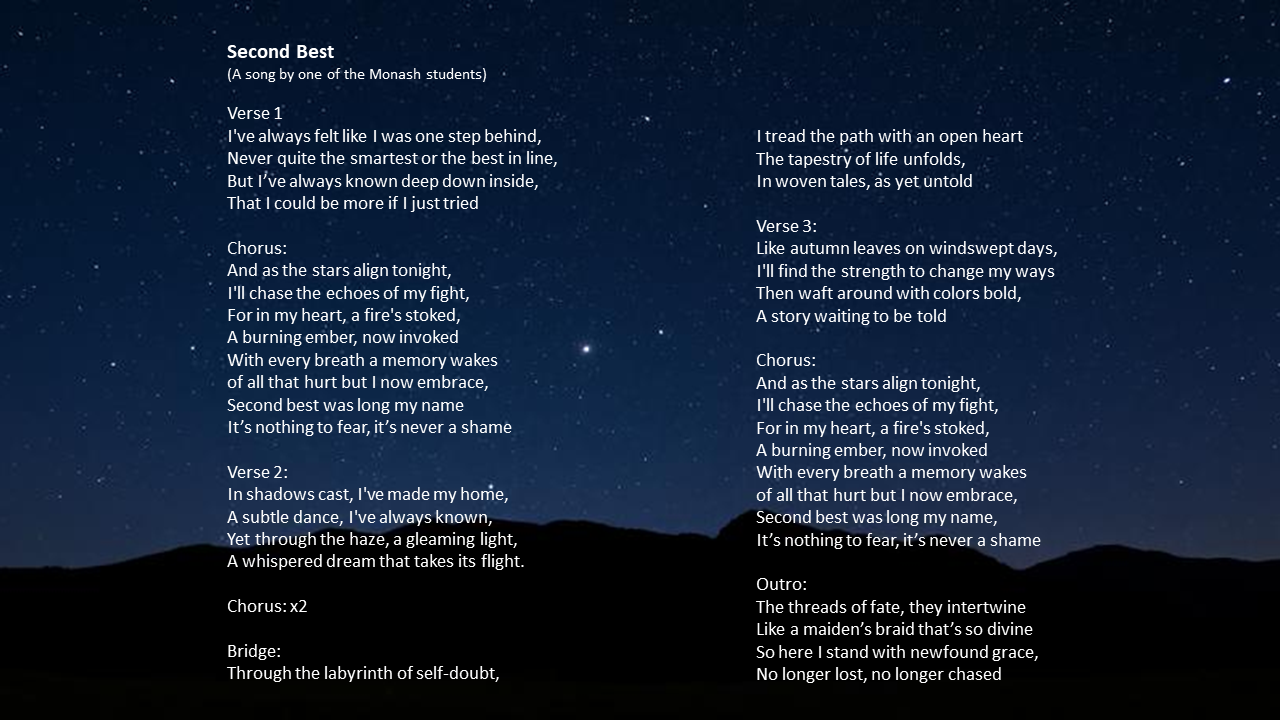
(a song by his student)
Follow-up Online Discussion
Student A’s comments and question:
Firstly, thank you so much for your comprehensive lecture on World Englishes. In linguistics, as it is a discipline that appreciates languages by nature, varieties of English, or world Englishes are recognised. But in educational contexts, would you think they will be regarded as a type of English? In IELTS, for example, students are marked against the criteria that are solely based on standard English. If assessments are based on standard English, but if their own English should be encouraged, for us teachers, how should we play with or strike a balance between the world Englishes and standard English? I still think individual English should be valued, and students should be exposed to world Englishes even if standard ones are preferred. What’s your take on this?
Dr. Xu’s response:
Many thanks for your kind words about my lecture on world Englishes on Friday (28 Nov. 2025)! Your attendance and questions are very much appreciated! It’s great to see that you approach the issue of ‘world Englishes’ and ‘standard English’ from the perspectives of linguistics, educational contexts, and language assessments. How to ‘play with or strike a balance between world Englishes and standard English’ is indeed a question that gets asked frequently. You may note that at the end of the lecture, Prof. Wang Lixun and I had a short conversation about a similar issue. As Prof. Wang pointed out during our conversation, ‘context’ is important, when we look at how our languages (in this case, English) are used, whether in their standard (or standardised) forms or local vernacular forms (or localised varieties). I’d refer to Mahboob’s (2014, 2015) ‘Language Variation Framework’ (which I talked about during the lecture, as one of the models for understanding world Englishes). According to the Framework, as you can see, the use of English (whether in its standard/standardised or vernacular/localised forms) depends largely on the ‘mode’ (written-like or oral/spoken-like), ‘use’ (specialised/technical discourse vs. everyday/casual discourse) and ‘users’ (among speakers of local, low social distance, e.g., friends, or speakers of global, high social distance, e.g., an EFL learner and a professor from the UK). Read More
In the educational context and language assessments, we consider these as formal, more written-oriented, and high social distance scenarios, therefore, more formal and standard forms of English are expected. This does not necessarily contradict with the everyday use of English, in the common translanguaging practice of multilingual speakers in multicultural societies, such as Hong Kong. Prof. Andy Kirkpatrick elaborated on some of the major functions of English, including 1) communication; 2) identity and 3) culture, and he proposed a continuum between ‘intelligibility’ and ‘identity’, in the sense that people choose to speak a standard form of English to focus on intelligibility (mutual understanding among speakers of English as a lingua franca, and/or world Englishes), and they may also choose to speak a vernacular or localised variety of English, e.g., Singlish in Singapore, or Konglish in certain Hong Kong social media platforms, to show the identities of the speakers/users of English; the latter use of English is common in many multilingual societies, and it serves a ‘solidarity’ function of English. Indeed, in many societies, different forms of English co-exist, just like what I said at the end of the lecture in response to Prof. Wang Lixun’s question, there are co-existing paradigms, e.g., the focus on ‘correctness’ and the shift to ‘appropriateness’ co-exist; and likewise, the ‘system world’ of different features of English and the ‘life world’ of different users of English also co-exist. By different forms of English co-existing, I mean, in many societies, the standard form, e.g., the acrolectal variety of English, co-exists with the meso-lectal and basi-lectal varieties of English. In the context of Australia, we have broad (accented, bogan sounding) Australian English, but we also have general and cultivated Australian English. In language proficiency tests, cultivated and general Australian English varieties often serve as the benchmarks. However, in reality, people do speak a whole range of different Australian Englishes.
To end my response here, I'd like to share a few quotes (regarding standard vs. nonstandard English):
Our colleague here at Monash, Prof. Kate Burridge, had a nice article on the issue of 'Standard and Nonstandard' English, and its title is "Linguistic Purism: The Tug-of-Love between Standard and Nonstandard". In this article, she points out:
"Standard English can never be a finished product; prescription would soon render it sterile and inadequate. And here lies a paradox: puristic endeavours necessarily involve a degree of mental dishonesty that comes from the inevitable contradiction between the actual linguistic behaviour of language users and the views they hold about their language. However, the confrontational relationship between standard and vernacular appears to be about the change. Many of the proscribed features of nonstandard English are now extremely widespread in both native and nonnative varieties of English. They are also gaining in status. With growing egalitarianism and liberalization, and with e-communication loosening the straitjacket effect of the Standard, we are seeing a more even-handed attitude to nonstandard variety. In short, nonstandard English is shaking off its stigma and 'going public'. Moreover, universal tendencies in variation and change predict that many of these nonstandard features will eventually be part of the repertoire of Standard English (if they aren't already)". (Burridge, 2007, pp. 12-13)
Jennifer Jenkins is a UK based English as a Lingua Franca (ELF) scholar. She argues:
"Standard English is by no means an easy language variety to identify. In the case of languages such as French and Italian, for which academies prescribe the forms that may and may not be codified in their grammars and dictionaries, the standard is evident. Even those people who do not themselves wish to promote it are able, year on year, to ascertain exactly what it is. All is less certain with standard English, not only in terms of its worldwide use but also in its Inner Circle contexts." (Jenkins, 2015, p. 24)
A well-known British writer, George Orwell, also critiqued 'standard English' in his own literary genre powerfully:
"Probably the deadliest enemy of good English is what is called 'standard English'. This dreary dialect, the language of leading articles, White Papers, political speeches, and BBC news bulletins, is undoubtedly spreading: it is spreading downwards in the social scale, and outwards into the spoken language. Its characteristic is its reliance on ready-made phrases – in due course, take the earliest opportunity, warm appreciation […] – which may once have been fresh and vivid, but have now become mere thought-saving devices, having the same relation to living English as a crutch has to a leg. Anyone preparing a broadcast or writing to The Times adopts this kind of language almost instinctively, and it infects the spoken tongue as well". (Orwell, 1968 [1947]: 26-27)
References:
Burridge, Kate. (2007). Linguistic Purism: The Tug-of-Love between Standard and Nonstandard. In Dunworth, Katie (Ed.) English in South East Asia: Challenges and Changes. Curtin University of Technology, conference proceedings. pp. 12-37.
Jenkins, Jennifer. (2015). Global Englishes: A resource book for students (3rd ed.). London and New York: Routledge.
Orwell, George. (1947). The English People. Collins, London.
Student B’s comments:
Thank you for providing this lecture. It was pretty engaging, especially the parts that expanded on the Topic 9 segments we had earlier (like World Englishes). Looking forward to attending more!
Reflection and Evaluation
Dr. Xu’s reflection and evaluation of his COIL experience:
I’ve heard about amazing things of Collaborative Online International Learning (COIL), as in Monash, we also have colleagues, who have been engaging in COIL practice in their teaching. However, I had not had a first-hand COIL experience until Prof. Wang Lixun contacted me regarding a possible lecture on World Englishes for his ENG1324 Introduction to Linguistics students online. I accepted his invitation happily with much anticipation. In the lead-up to the lecture on Zoom on the 28th of November, 2025, Prof. Wang Lixun and I had a series of email exchanges, sharing information of our respective courses (or ‘units’ here at Monash), and relevant PPT slides, as well as the logistics for the lecture. We even had a test run to make sure the Zoom connection would work a few days prior to the lecture. It turns out that good preparation makes COIL a great success. I thoroughly enjoyed the experience of ‘teaching’ around 100 students online, and I could feel that students (and Prof. Wang Lixun) were very much engaged during the lecture. I used to have ‘Marc in Conversation with the Experts in the Field’ sessions in my own units at Monash University, for which I organised Zoom recordings of my ‘conversations’ on relevant topics with some of the leading experts (as far as I know), and developed them into teaching materials for our students to access via Moodle, or during on-campus tutorial activities. To me, this COIL practice serves as a broader platform, enabling a more ‘live’ teaching and learning experience. The sense of synchronous interactivity makes a huge difference during the lecture, and the follow-up Q/A session as well as the post-lecture discussion forum. The major benefits, as far as I have experienced, include: 1) achieving field-related cutting-edge knowledge exchange and transfer among colleagues and students involved in the COIL session(s), in this case, knowledge of the up-to-date understanding of world Englishes, their models and associated translanguaging practices; 2) enabling large-scale reciprocal teaching and learning via technology assisted transmedia(ted) communication, utilising technological affordances, such as Zoom, Moodle, email and associated webpages and hyperlinks, digital images and a/synchronous forums; 3) developing sustainable course/unit and curriculum materials (e.g., lecture recordings, and accessible forum discussions) which are well aligned with students’ learning needs and lecturers’ expertise and course/unit learning outcomes, enhancing authentic and ongoing ‘international’ teamwork to enrich the learning and teaching experiences of the students and lecturers. Overall, this COIL practice transcends territorial, temporal and disciplinary boundaries, and it is well and truly enriching.